Photobucket had recently changed their policy and now all the images from my 650+ blog posts are disabled. I am slowly editing them by moving my images to my own server at AWS, but it will take time. In case there is a particular old post you want to see the images of, kindly drop me a mail at mizohican@gmail.com and I'll keep that at a high priority. Thank you.

Wednesday, November 19, 2014

Chp 536. Game Developer Conference, 2014


And so last week, Sumeet and I, the two Co-Founders of FITH Media, took a last minute cab ride to Pune to attend the NASSCOM Game Developer Conference held in Pune.

We actually didn’t plan on attending this year due to our hectic job schedule, and also for the fact that we didn’t submit any of our new games for the “Game of the Year” award ceremony, unlike last year when not one, but TWO of our games were shortlisted for the final round of this prestigious award (though we eventually didn’t win, it was an impressive achievement for a new gaming studio to have two of its game nominated on its very first year of existence). [NGDC 2013]

This year had been different, with a lot of ups and downs here and there, not just regarding game development. And then in the last minute, a few discussions took place and Sumeet and I were off to Pune. The cab ride was 1900 bucks, and since we left Mumbai during evening rush hour, it took us almost 2 hours just to leave Mumbai! Once we were out of the city, we took around that same amount of time to reach Pune. :)

The next day, we made our way to the venue. Last year, NGDC was held at JW Marriott’s. This time it was at The Westin. And the best part was, this hotel was just a few meters away from Burger King, but I’ll get to that later.

Since we registered in the last minute, the participation cost was 3500 per head, unlike last year where we not only availed of the early bird registration (2000 per head) but even got an additional 1000 bucks discount because our games were nominated. But overall, the cost was almost the same as this time it was just Sumeet and I whereas last year there were 7 of us attending.

[Click on all photos to enlarge on a new tab]


The place was set up just as beautiful as last year, though it is not a hidden fact that the venue was smaller.
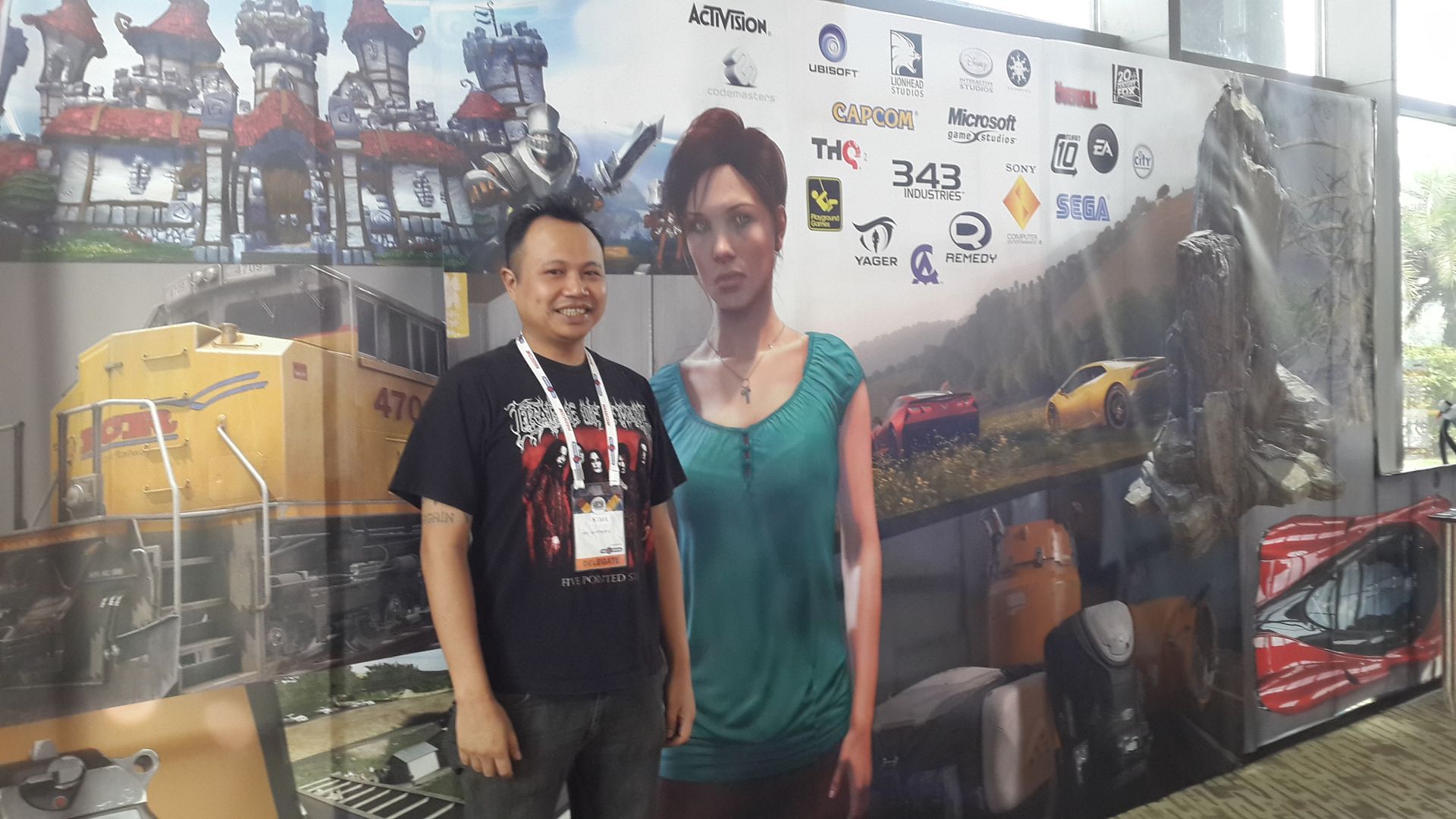

I got to meet Shashank, who was an employee of FITH, until he got an admission at DSK, one of India’s premier International institutes on animation and video game design. His game had been shortlisted for the “Student game of the year” category again, just like last year.
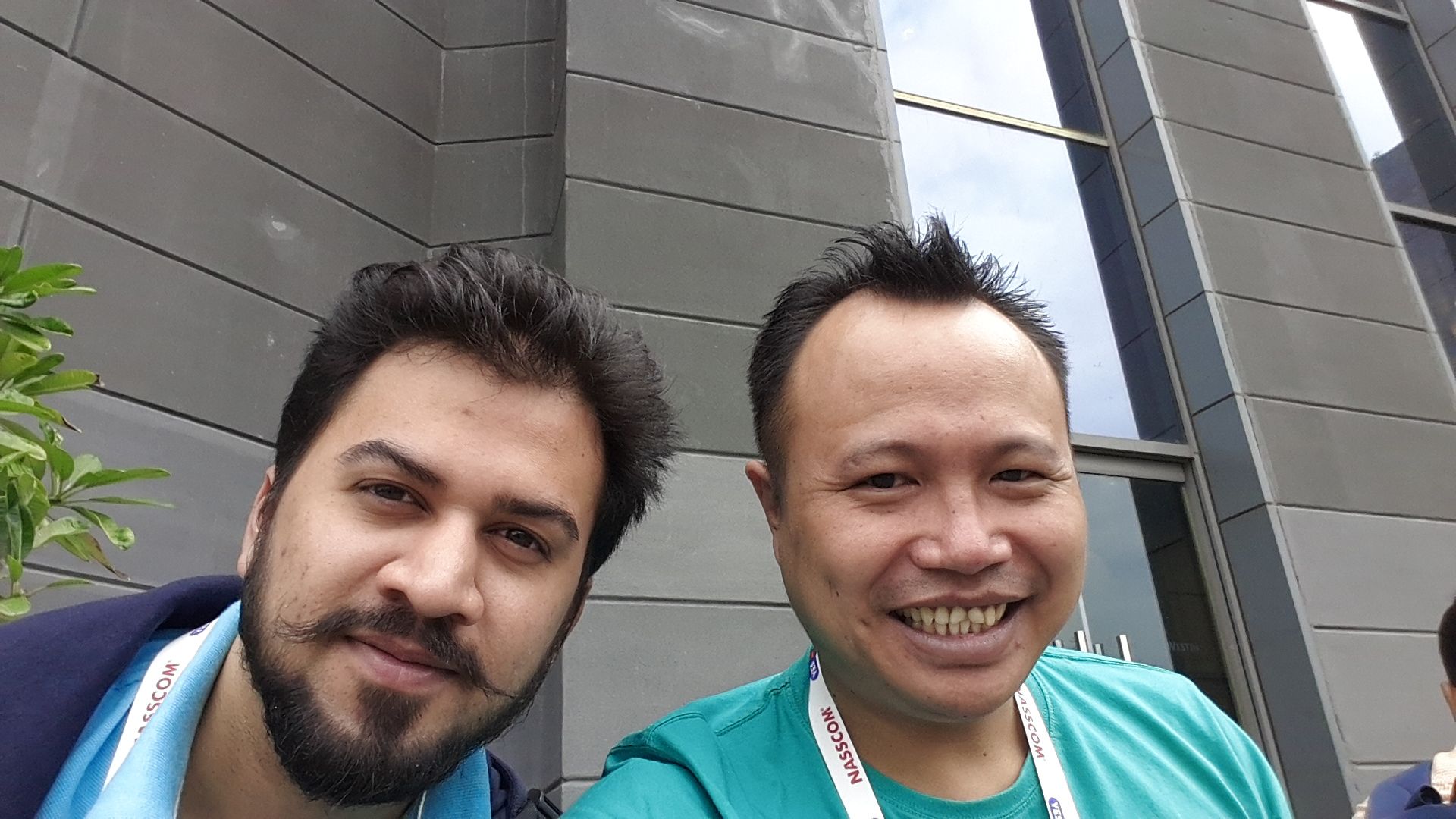

I made him promise that he’ll join us again once he graduates from DSK :)

I had a very fruitful time meeting and catching up with friends and founders of other gaming studios. Since we’ve been pretty much below the radar this year, most of the questions I got immediately was, “Hey how come you’re no longer active at our gaming discussion forums?” :) I had to explain about our upcoming big plan many times.

I also attended a couple of really good seminars.


Since most of the sessions were taking place simultaneously, Sumeet and I split up, with Sumeet attending the Technology related ones while I attended the Game Design topics.

The first session I attended was “Dual Game Narrative” by JosuĂ© Monchan, and it was definitely my favorite. Don’t get me wrong, the other speakers also spoke really well, but while most of them were promoting their own games or apps (the ones they themselves had developed), Josua gave a universal reference, giving examples such as Tetris. I mean, I never assumed there could be a narration behind such a simple game as Tetris, but his talk was really an eye opener for me. The importance of narrative in gaming. And being a copywriter for 5 years before joining the gaming industry, I could relate to a lot of stuff he talked about.

After a long day of attending more talks and meeting more people, we left the conference. We didn’t stay for the Award presentation or NGDC official party as we had a very important appointment, the content of which will be revealed later once things are made official.

After the meeting, we stopped at a cozy restaurant near our hotel, and I just had to post this here - masala peanuts. My favorite side-serve here in Mumbai, but the way it was presented in Pune was so different :)


The next day, we visited all the stalls and tried their games. The stalls were regional winners of NGDC’s game dev hackathon competitions and most of them used Unity.
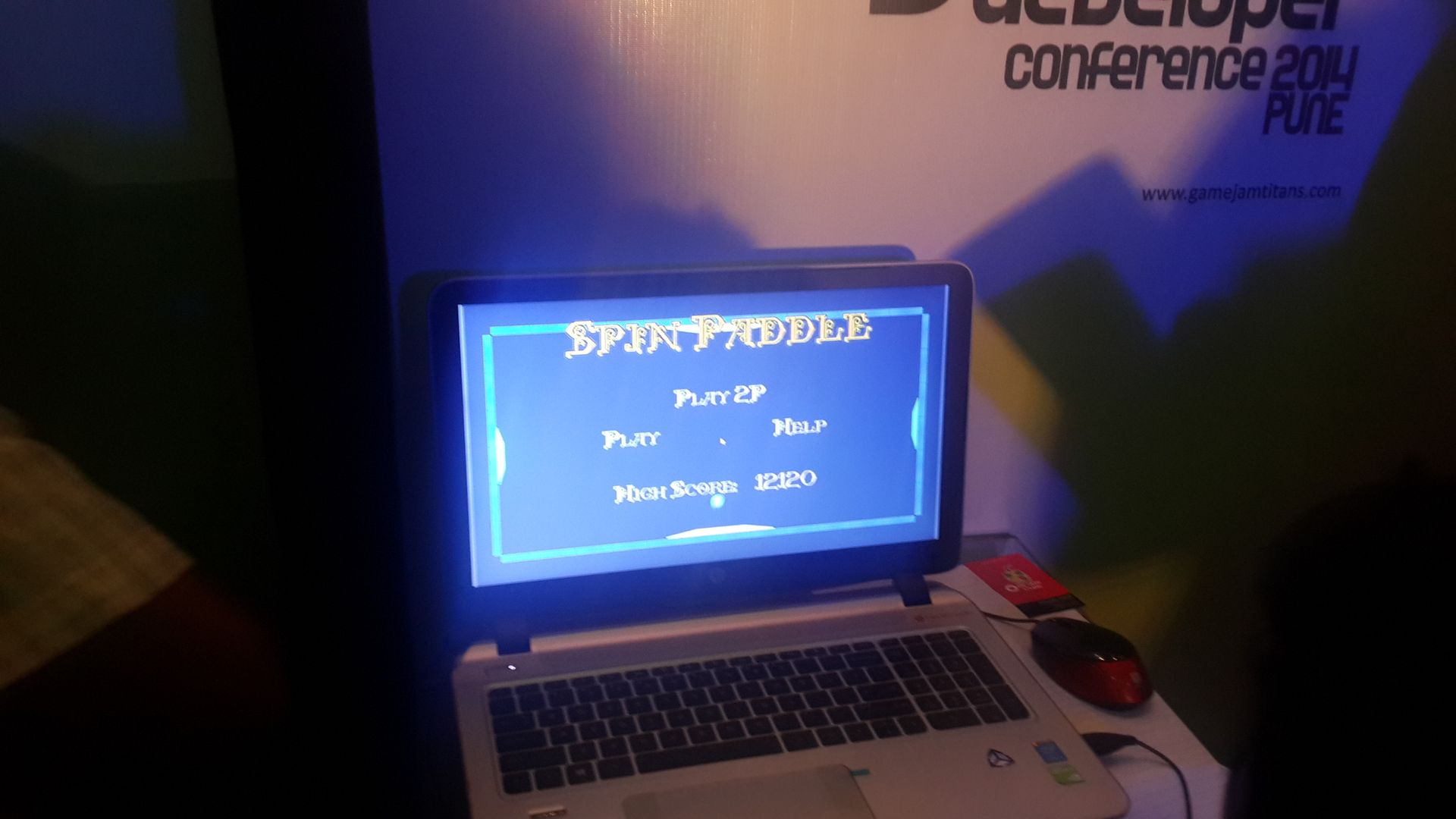

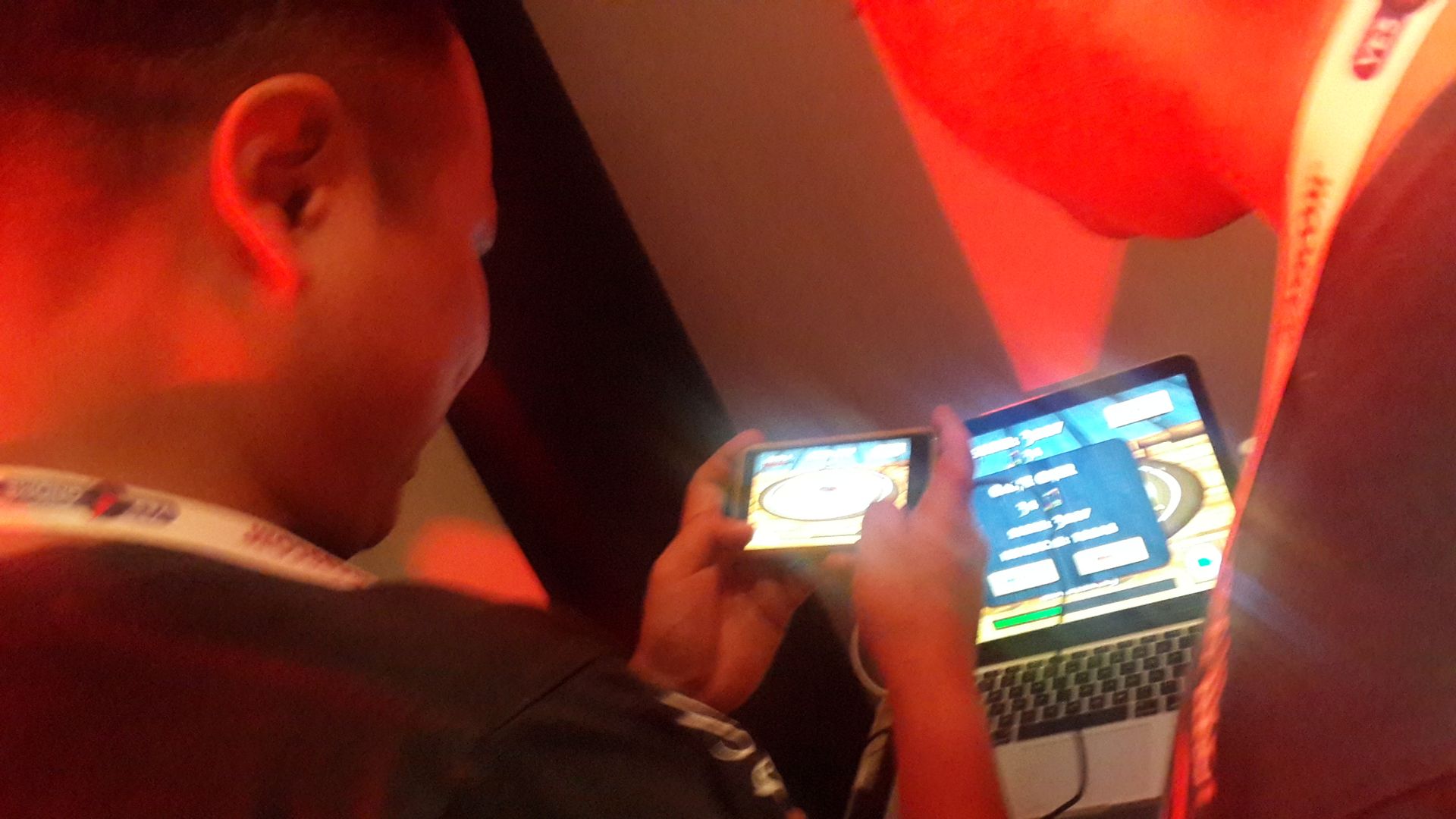
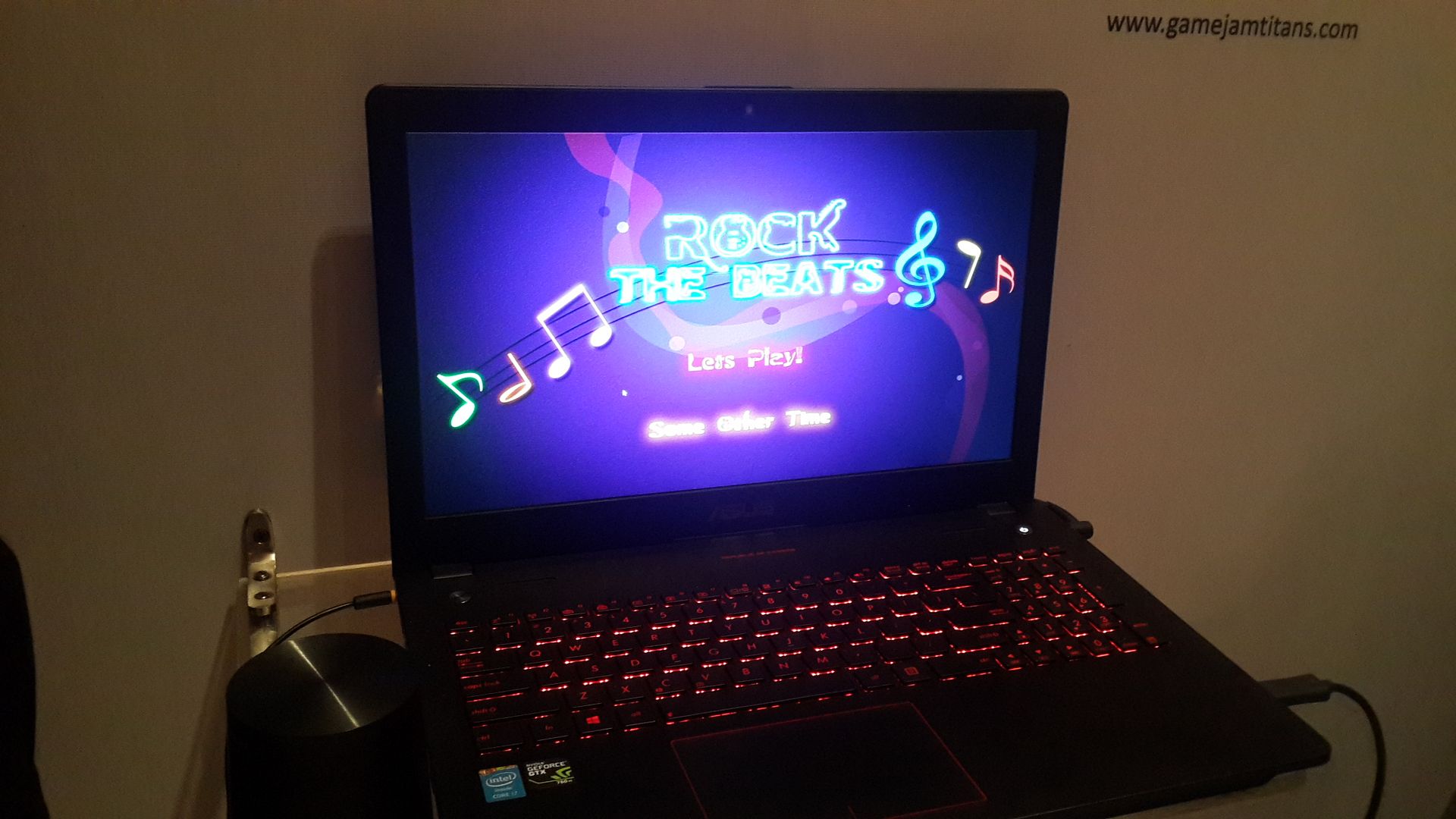


What was truly impressive about some of the winners were that they were just kids, 7th standard students, and you should see how excited and enthusiastic they were while explaining the concept of their games to us. Hope that fire in their eyes never dies out.
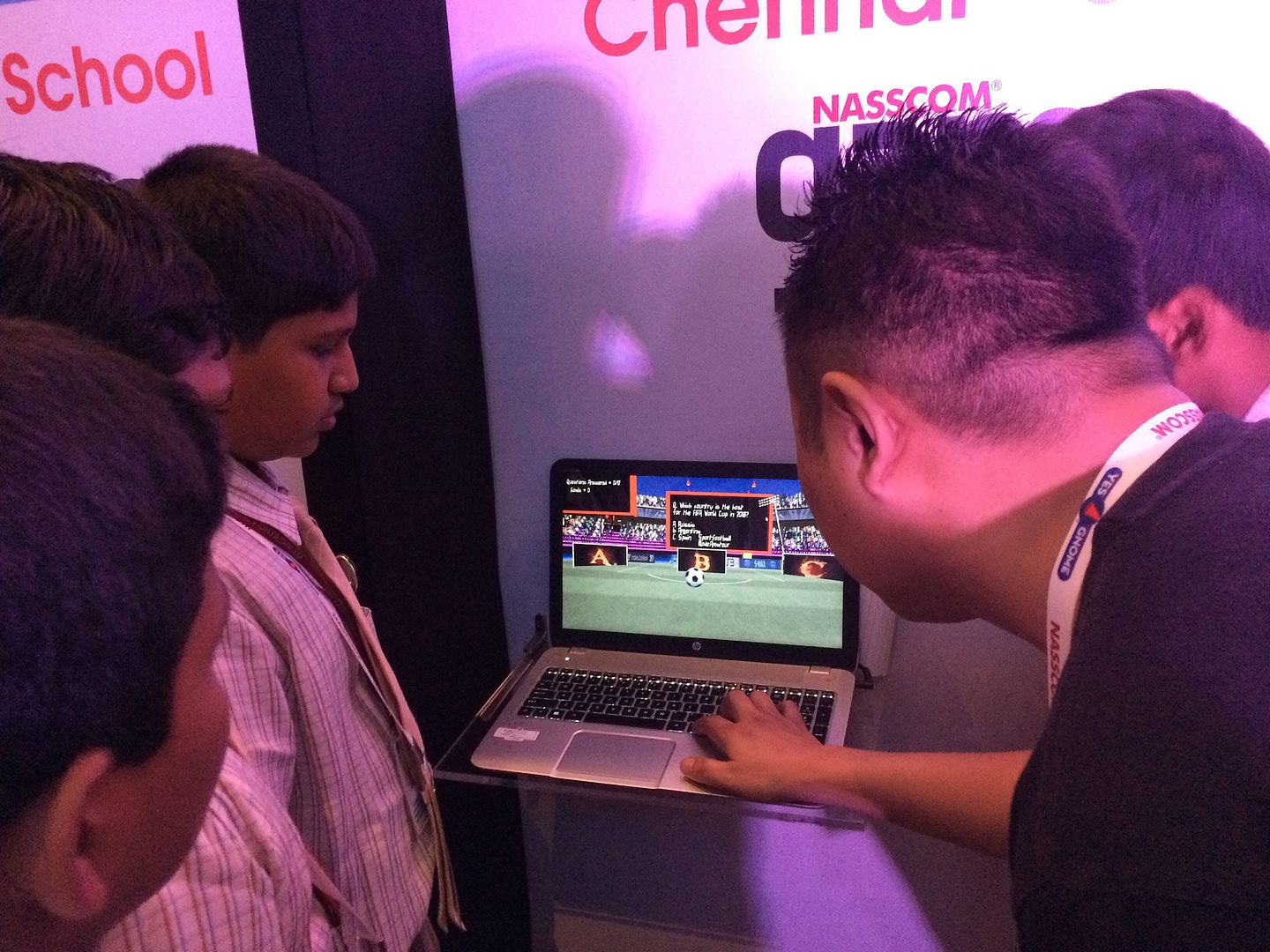
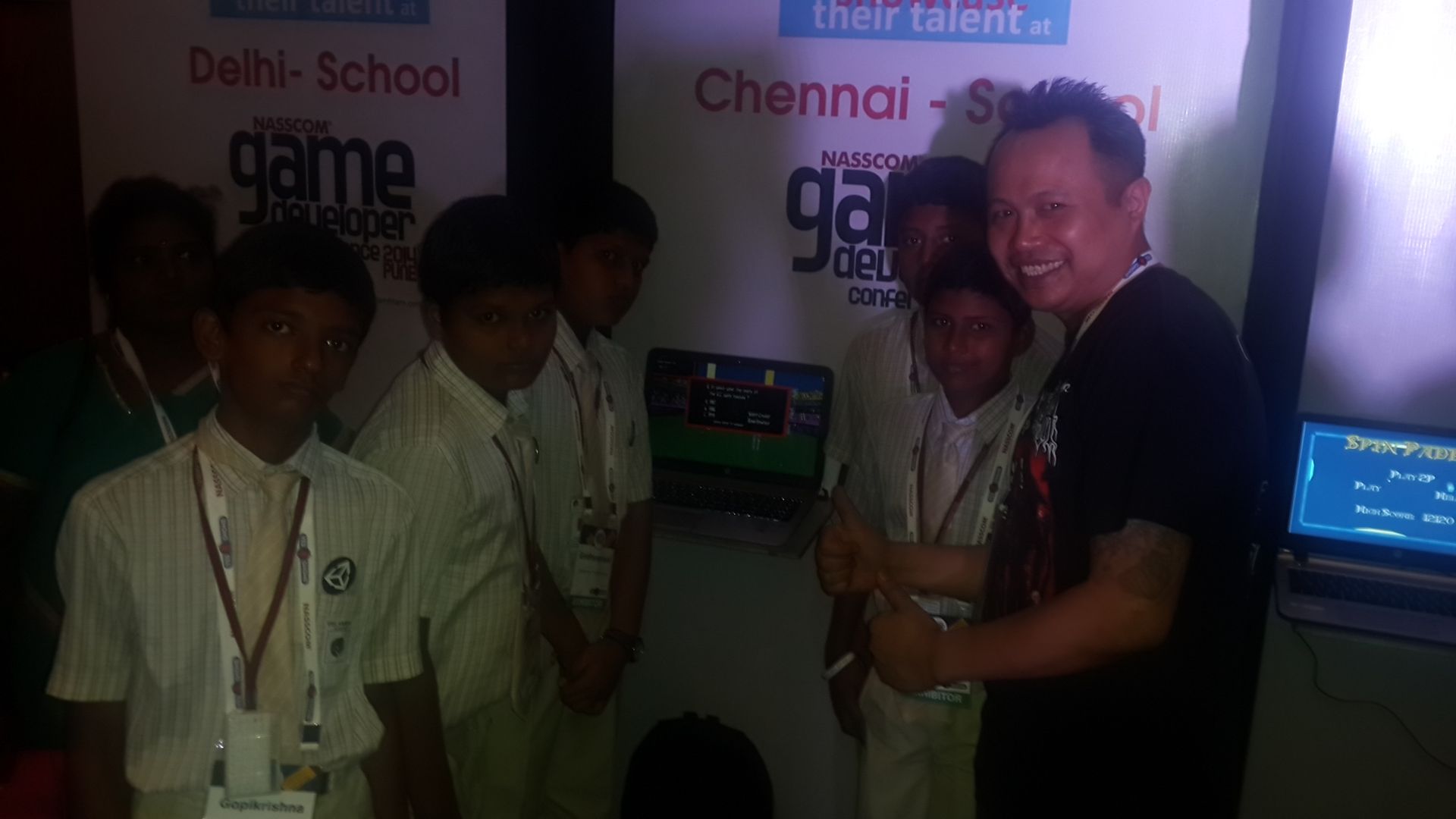
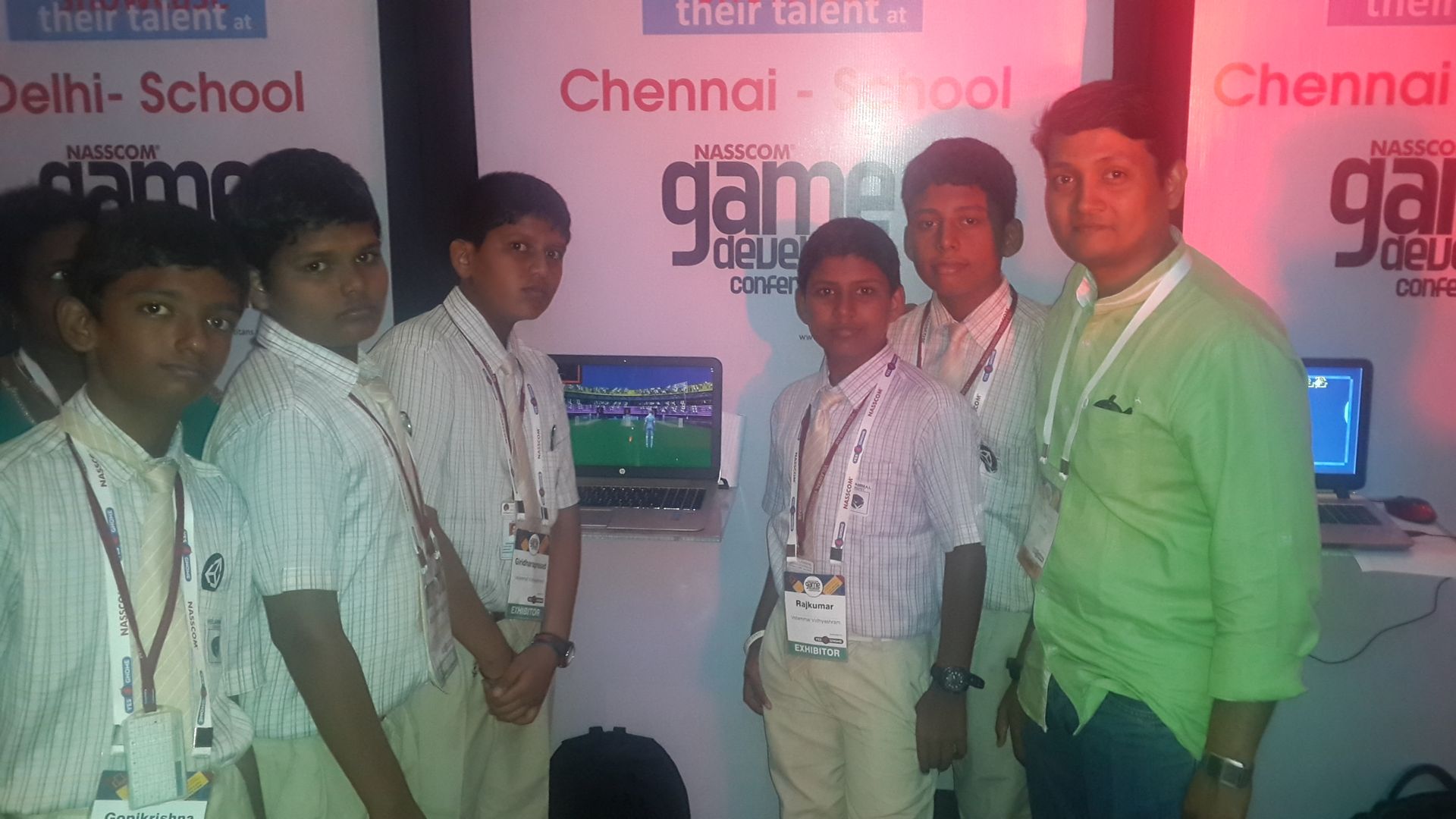
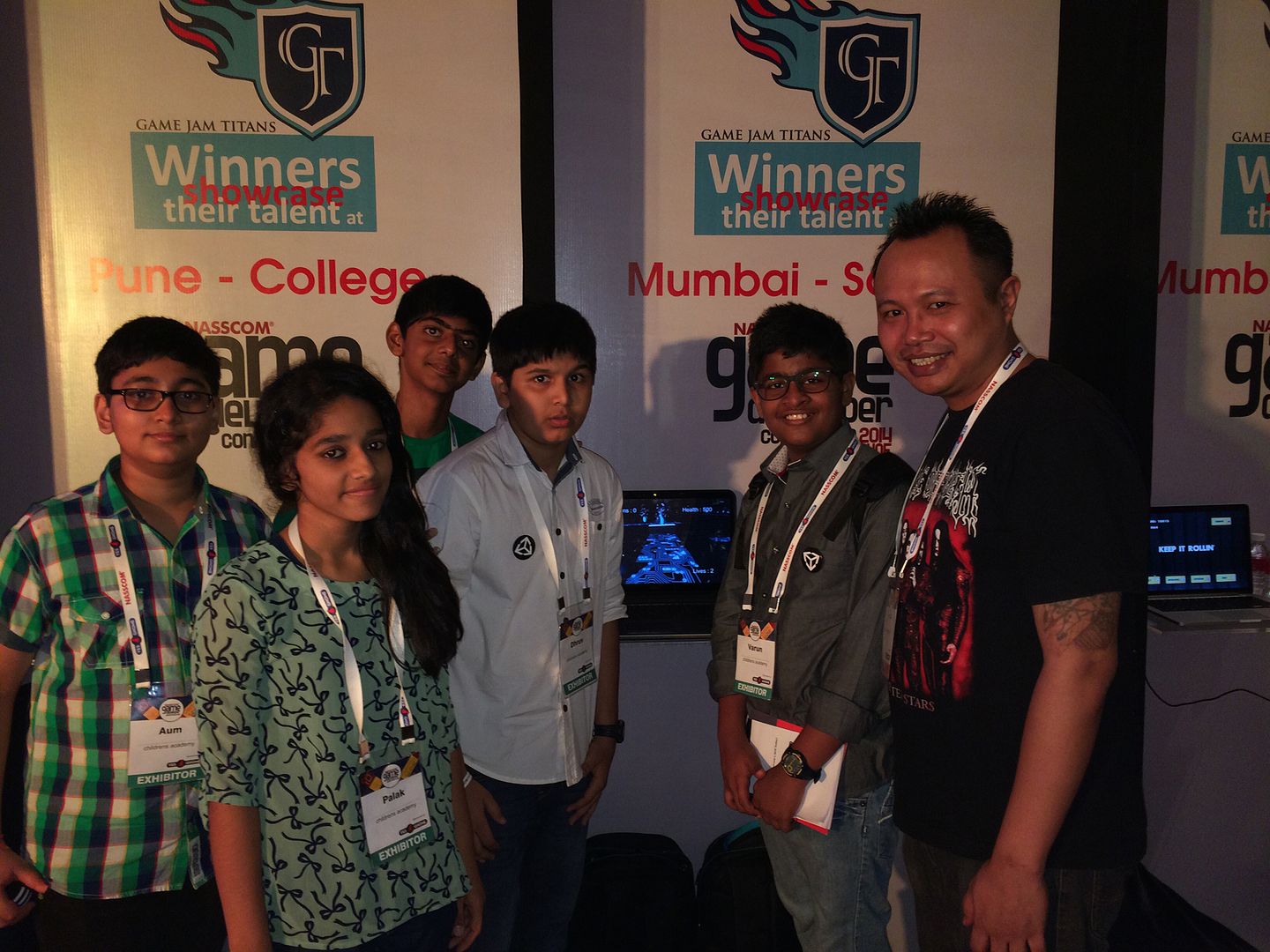

We even gave our contact details to these kids, after all, you gotta catch them young right? :) They were able to answer any query we had and they really knew their stuff well.

There were even a number of international stalls, like the one below presented by students from Taiwan. They showcased a very interesting strategy game based around an office setting.
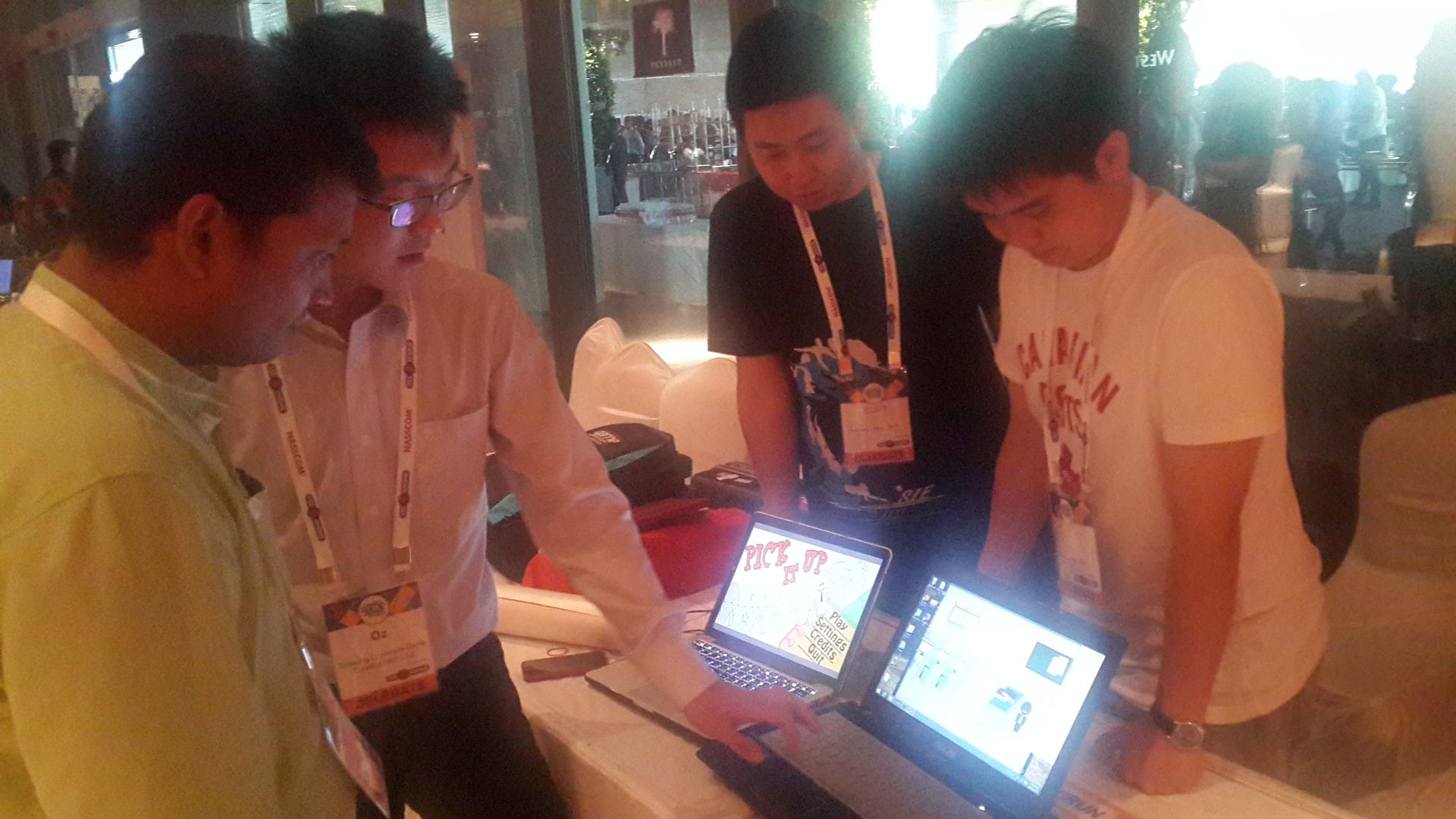


They told us how much they envied us because back in Taiwan, it seems the government does not acknowledge gaming as an industry, and so the people have to set up everything by themselves out of their own pockets.

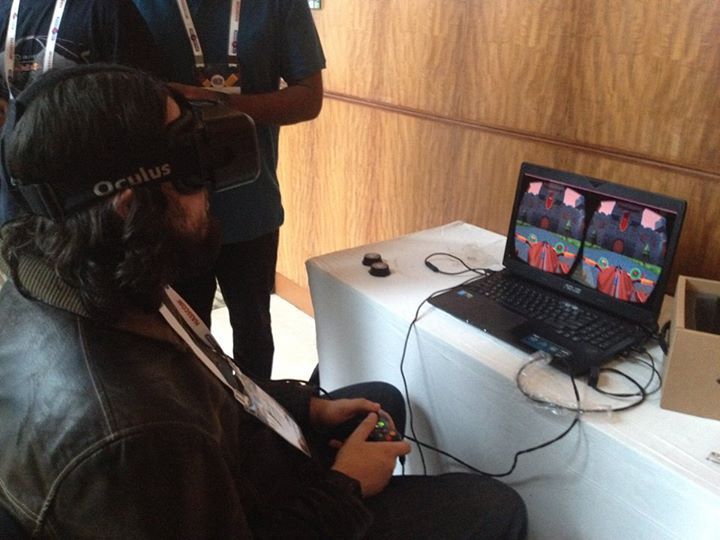
Perhaps the most popular stall was Shashank’s stall, where his team “Too Mainstream” was showcasing their game called Sagittarius. It is a VR action game which requires an Oculus Rift to play the game. The gaming experience was truly mind-blowing, and we had to stand in a long queue just to try out their game.

And of course an NGDC is incomplete without the CosPlay. Lo and behold - Heavy Metal meets Half-Life Metal :)
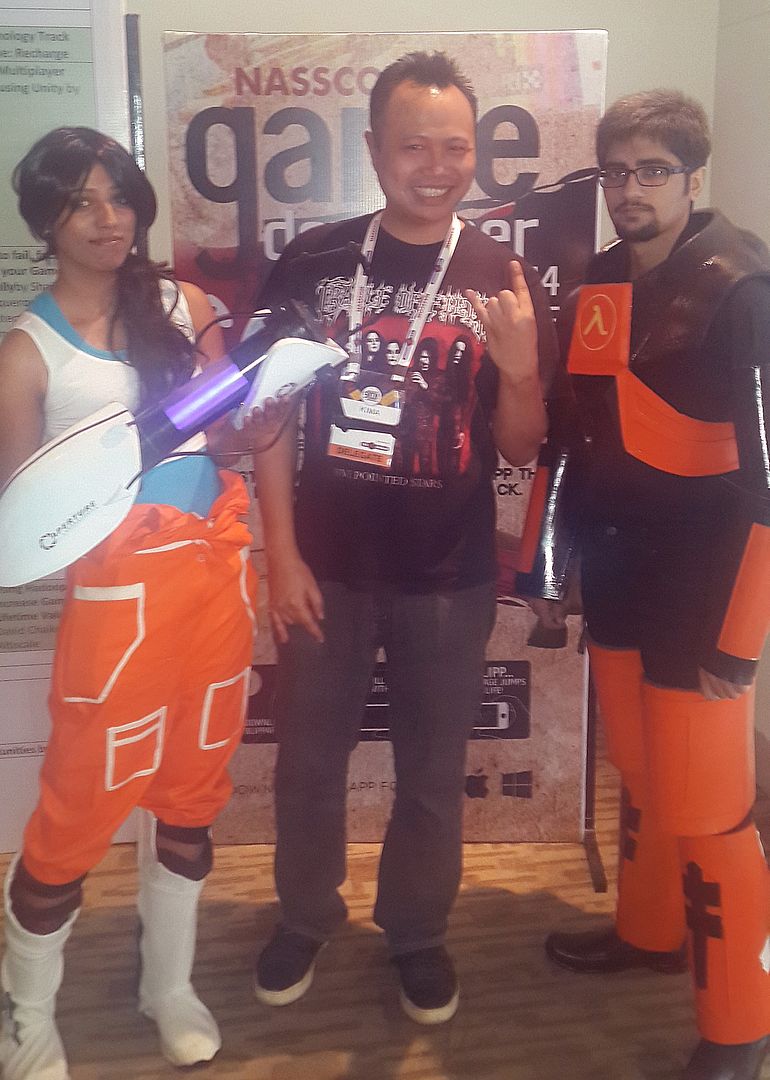

Though these guys were good, I was kinda disappointed Niha Novacaine wasn’t hired again this year like the last time.

But the biggest disappointment came after we left the conference venue.


The one thing we really look forward to at an NGDC is visiting Burger King (not the international franchise one) before travelling back to Mumbai. They have one of the best Beef steak burgers I’ve ever tasted, and boy it is huge and scrumptious. Here’s a pic we took last year after attending the very same conference. [NGDC 2013]
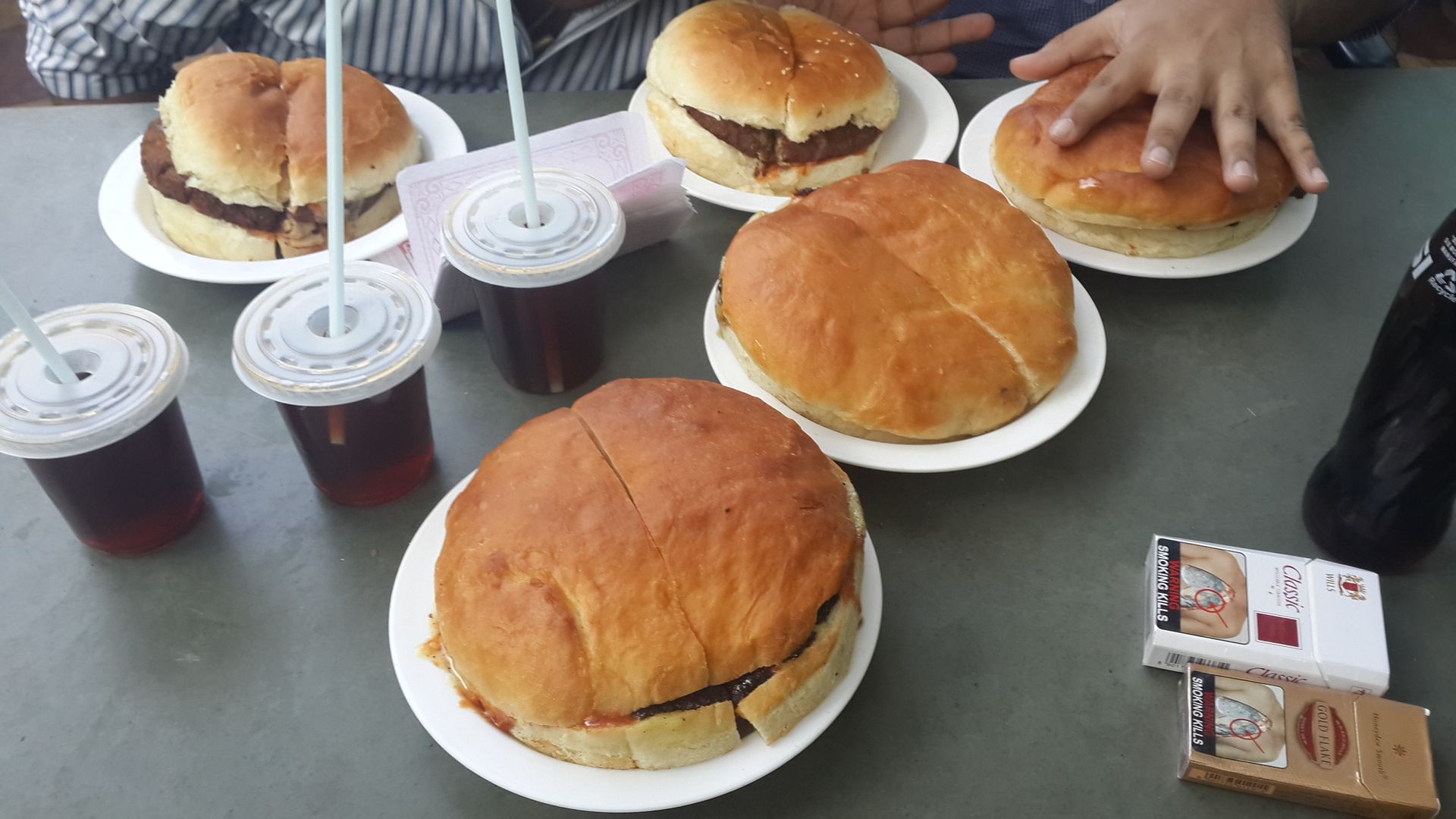

This time, I was even more excited because since NGDC was held at The Westin, Burger Kings was just a 2 minutes’ walk away from the hotel. We both even skipped breakfast earlier that day, and when we left the conference around 2 PM, our stomachs were grumbling with hunger and excitement.

Heaven came crumbling down when we reached the place and they informed us that they were out of beef! Aaaaaaaarrrgghhhhhh! Out of freaking beef!!!

“Chicken burger instead?” the man asked us. We laughed at his suggestion, painfully, with tears rolling down our cheeks, and slowly walked out of Burger King dejectedly.

We found a nice restobar nearby playing 80’s euro-dance music, where we finally decided to have lunch. We were both so disappointed with Burger King that we quickly downed a pitcher of chilled draught beer to drown our sorrows in. This was accompanied by momos.
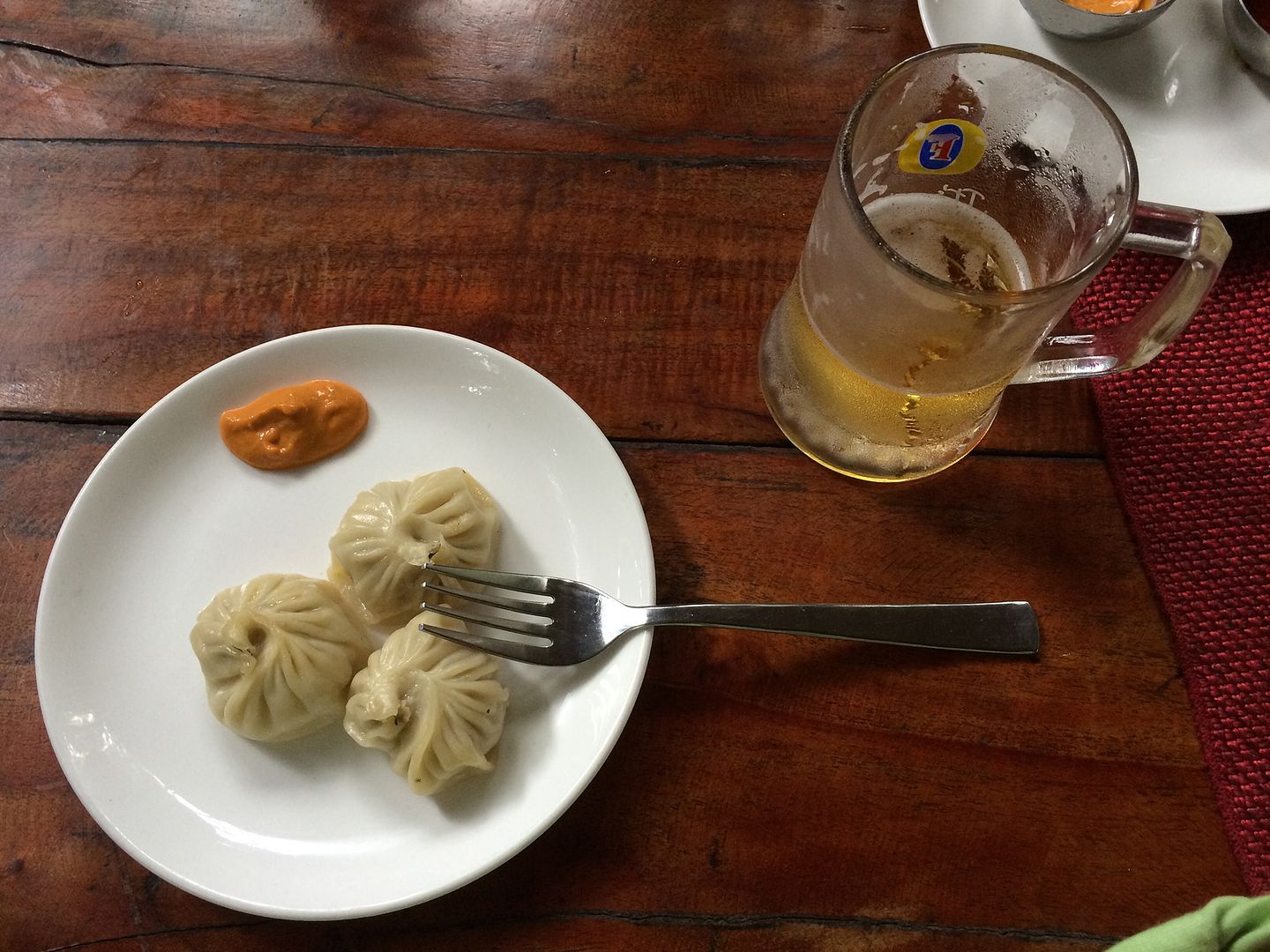
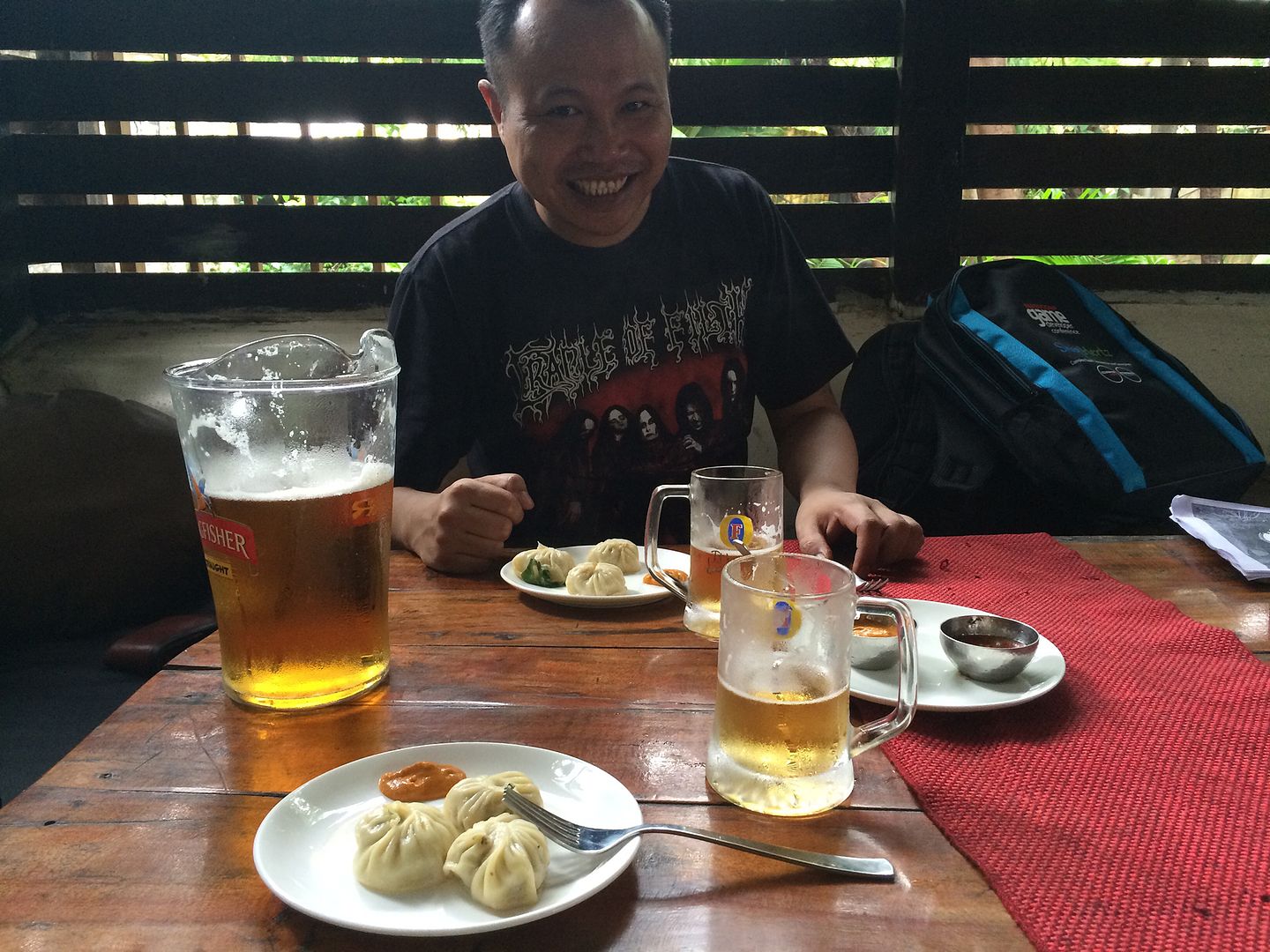

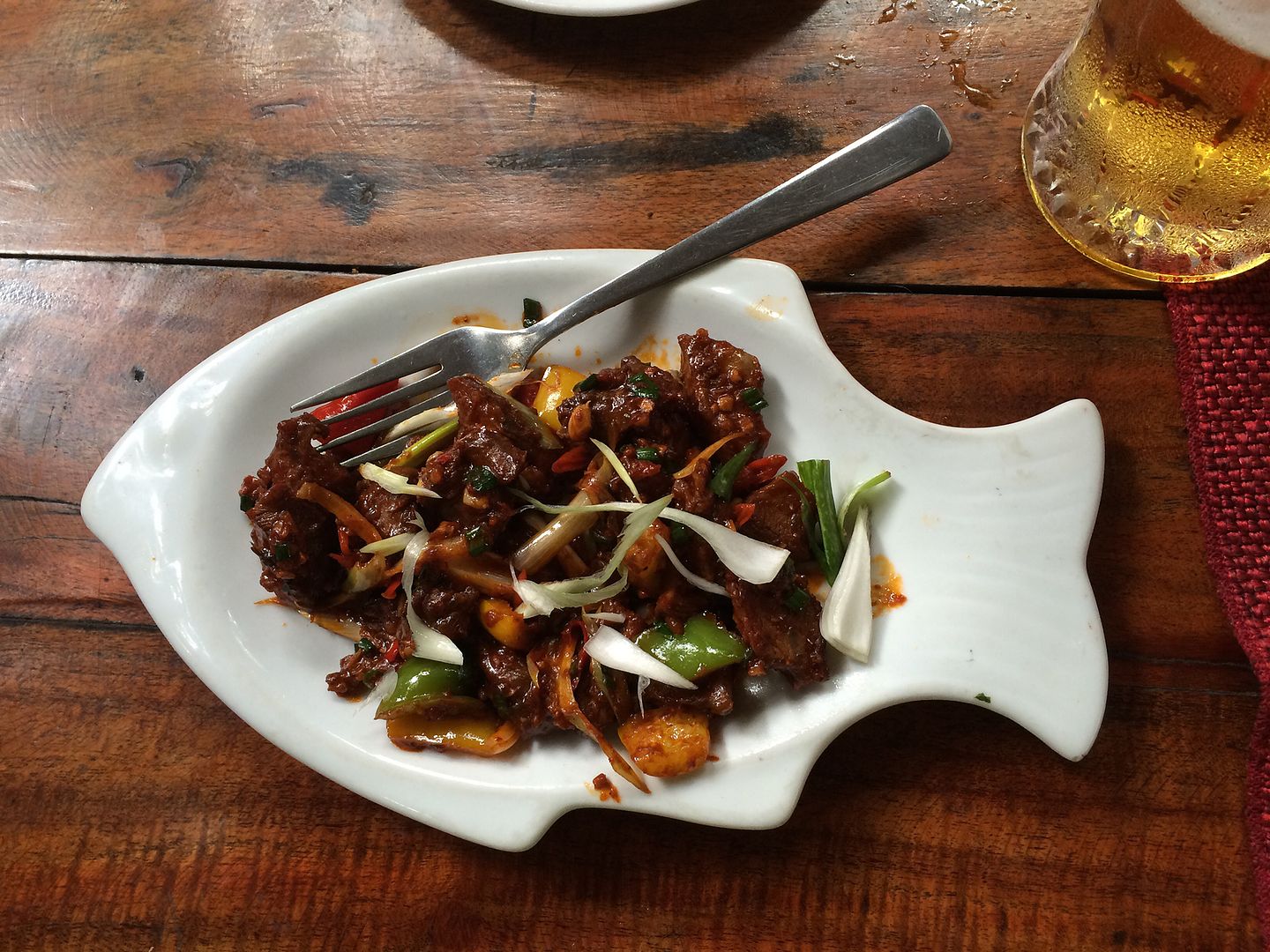
We also ordered Mongolian lamb for starters, which was pretty delicious.

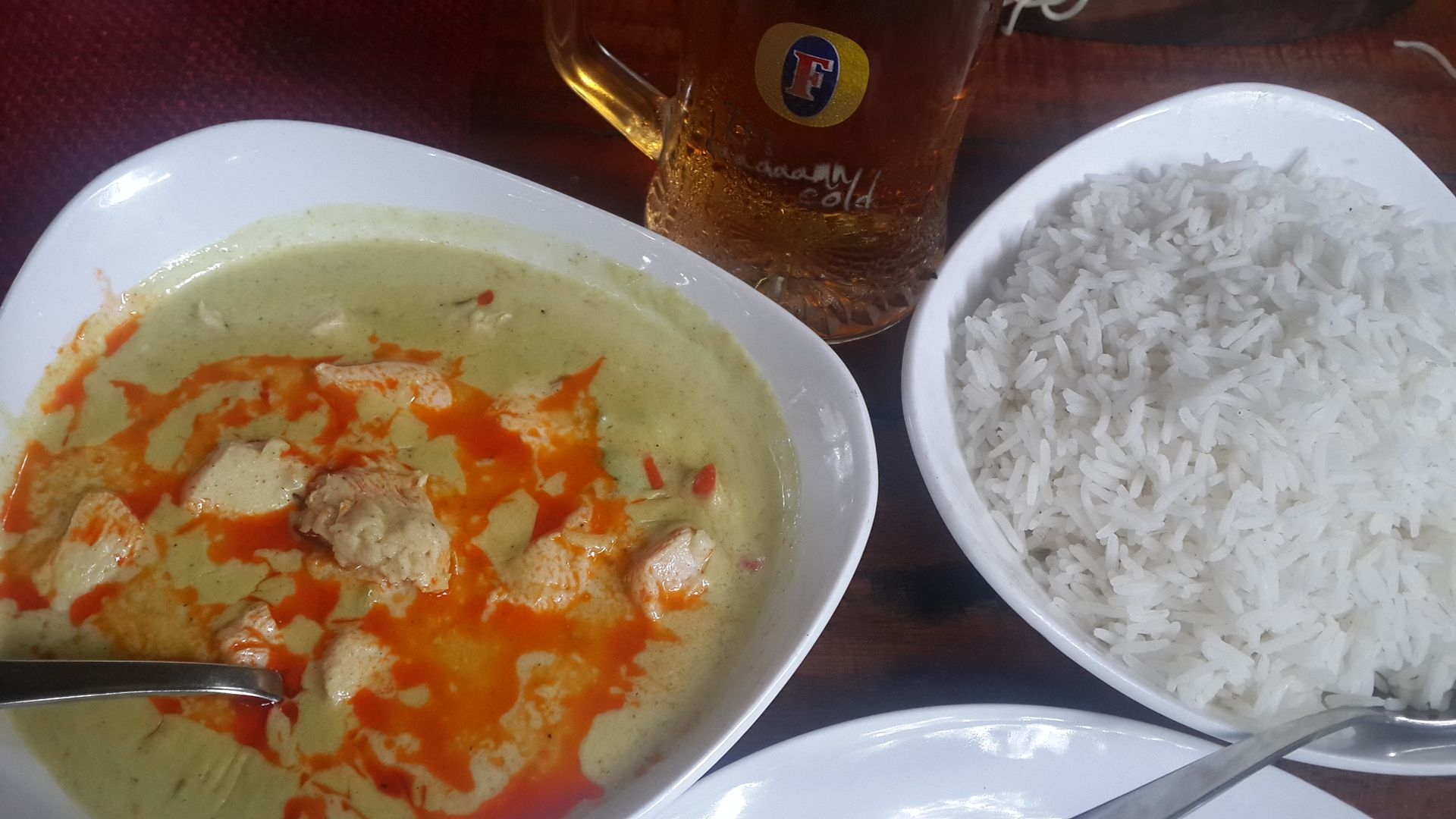
For our main course, I had the “Panthe Khause”, a Burmese style chicken curry served with steamed rice and garnishes, while Sumeet ordered the “Bulgogi”, chicken strips marinated and wok with vegetables served on a bed of sizzling noodles.
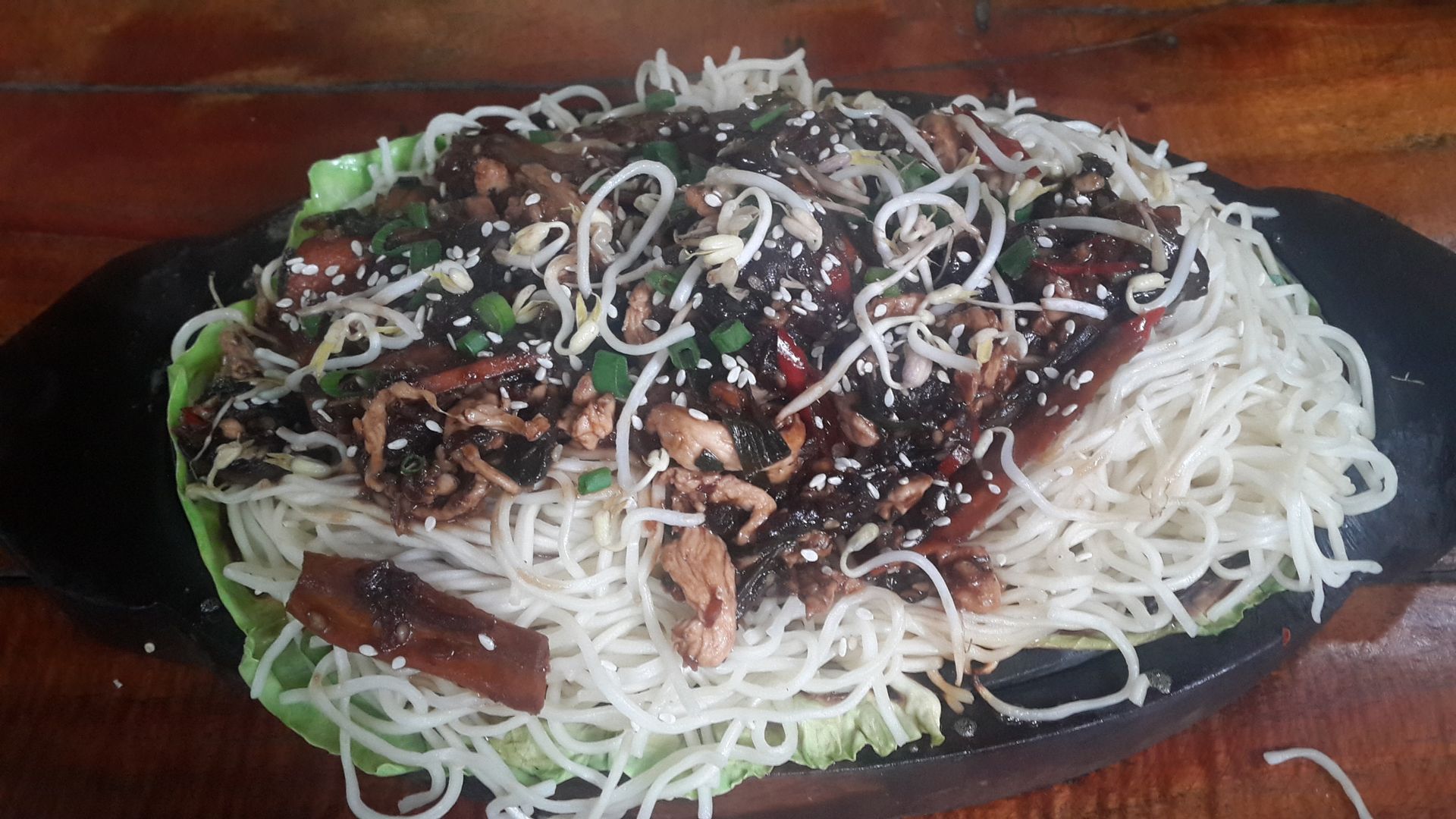

Not bad, though we still preferred the beef burger. After our heavy meal, we made our way back to Mumbai.


I was keeping my fingers cross at the Lonavala toll gate because last year, our car broke down at the location, and we had to be dragged back to Mumbai by a Tow truck. It took us 6 freaking hours to travel from Navi Mumbai to Mumbai!!!!

And of course no trip to Lonavala or beyond would be complete without the traditional chikkis, papris and jelly sweets. Anybody want some? :)

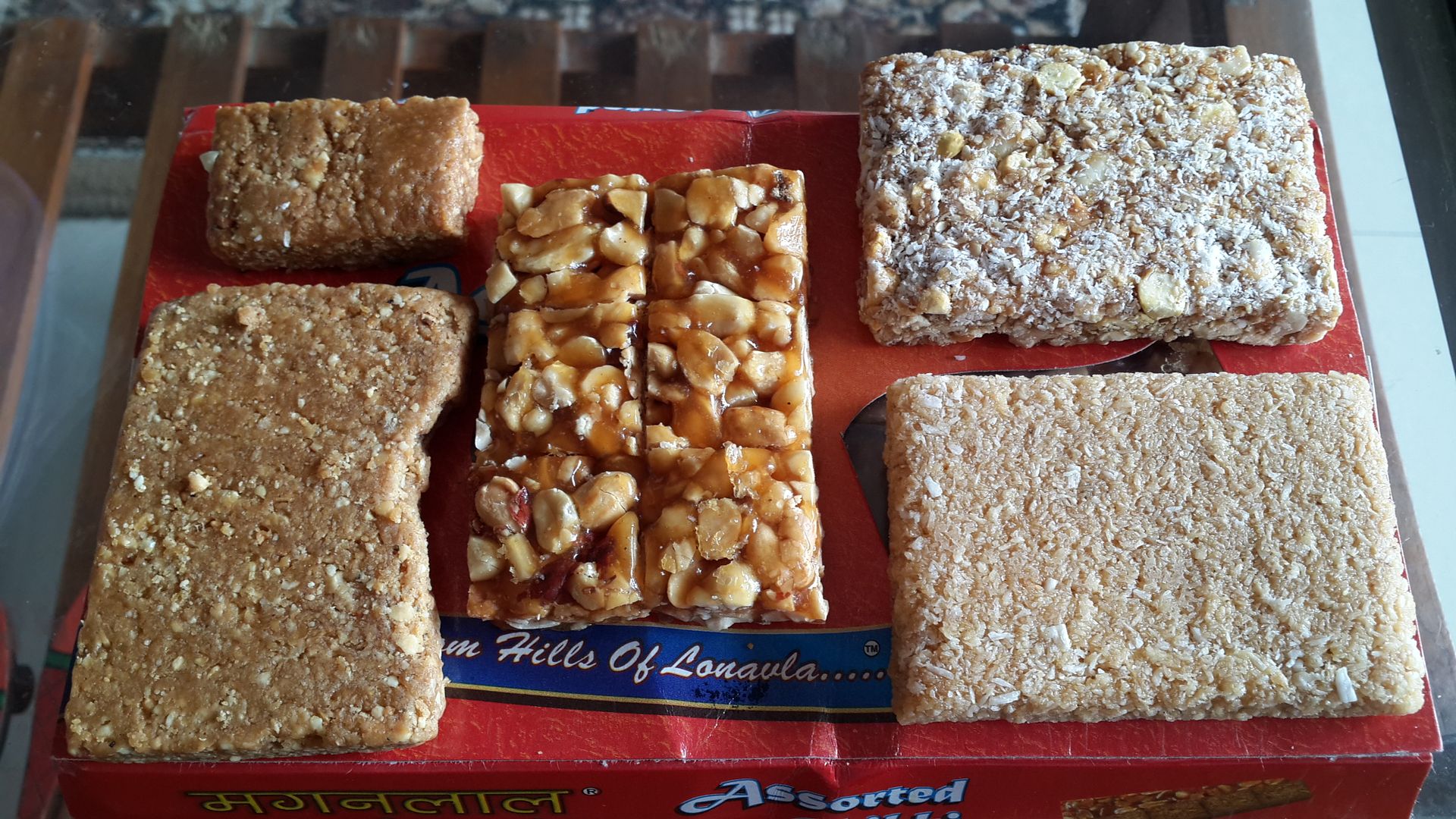

So that was it. Overall, it was a fruitful conference. Hope I’ll get to attend this conference next year too. Cheers for now.


Monday, November 10, 2014

Chp 535. North East cuisine in Mumbai


So yesterday was a very fruitful and stomachful day!

Four days ago, I received a mail from Rushina, a very prominent food blogger, reviewer, consultant and owner of APB Cook Studio here in Mumbai. We met at a couple of those Coral Networking dinners I used to take part in, as we all shared the same passion for food, though of course she’s a much more professional cook and foodie than me while I’m just a self-proclaimed amateur foodie. Back then, she was also the consultant for Godrej Nature’s Basket while I was the creative lead at an Ad agency handling their account.

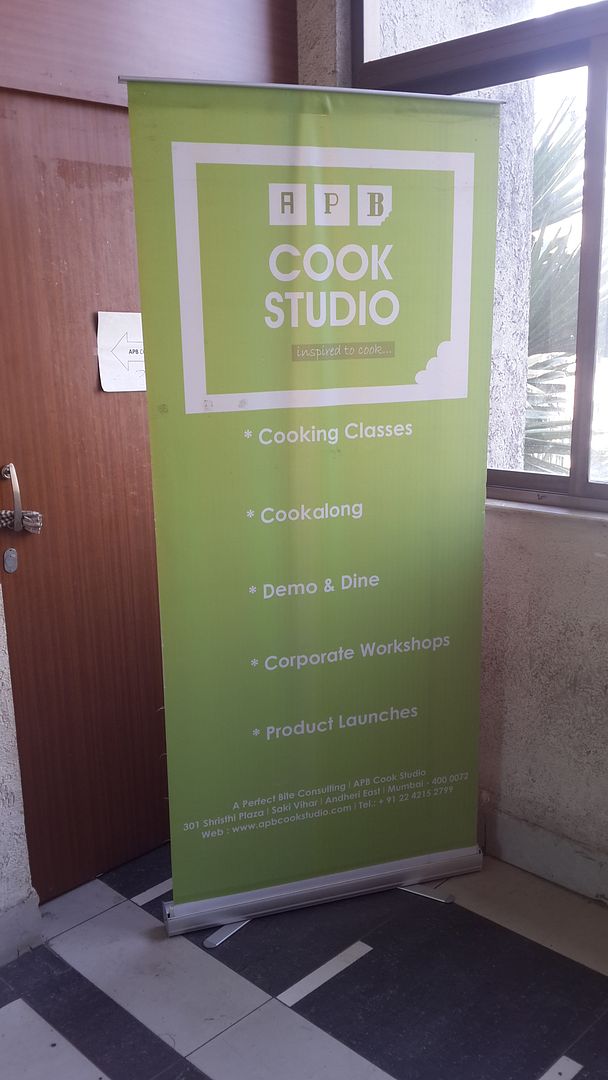
This time, she invited me to this new (and experimental) event called “Demo & Dine: Cuisines of the North East” that she was organizing at her Cook Studio. It was too good an offer to decline, and I was really curious to know what actually goes on at such “cook studios”.

So my RSVP was an immediate yes.

I reached the venue right on time, in spite of being delayed due to the “Equal Streets movement (though I admit it was indeed a glorious sight watching all the kids and artists play and perform right on the entire stretch of Linking Road, Bandra). 


I reached the venue with the help of Google Maps. Shrishti Plaza. Being a Sunday, the commercial building was deserted.


The studio was located on the third floor…


Just a few people had reached when I walked in, and they were just starting to set up the place


The introductions started and I quickly blended in. Some of the other invitees were food bloggers, so I had to keep introducing myself as, “I’m also a blogger, but I don’t write about food” :D

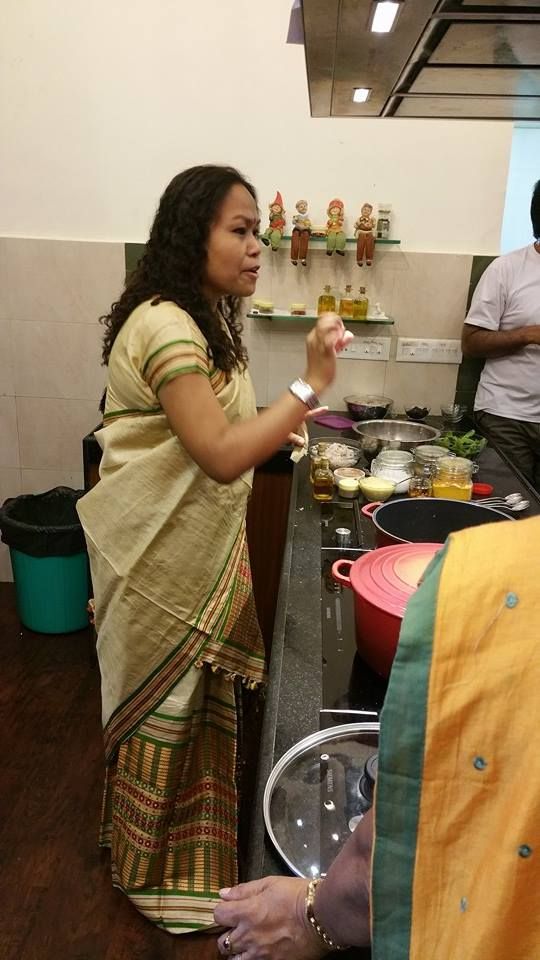
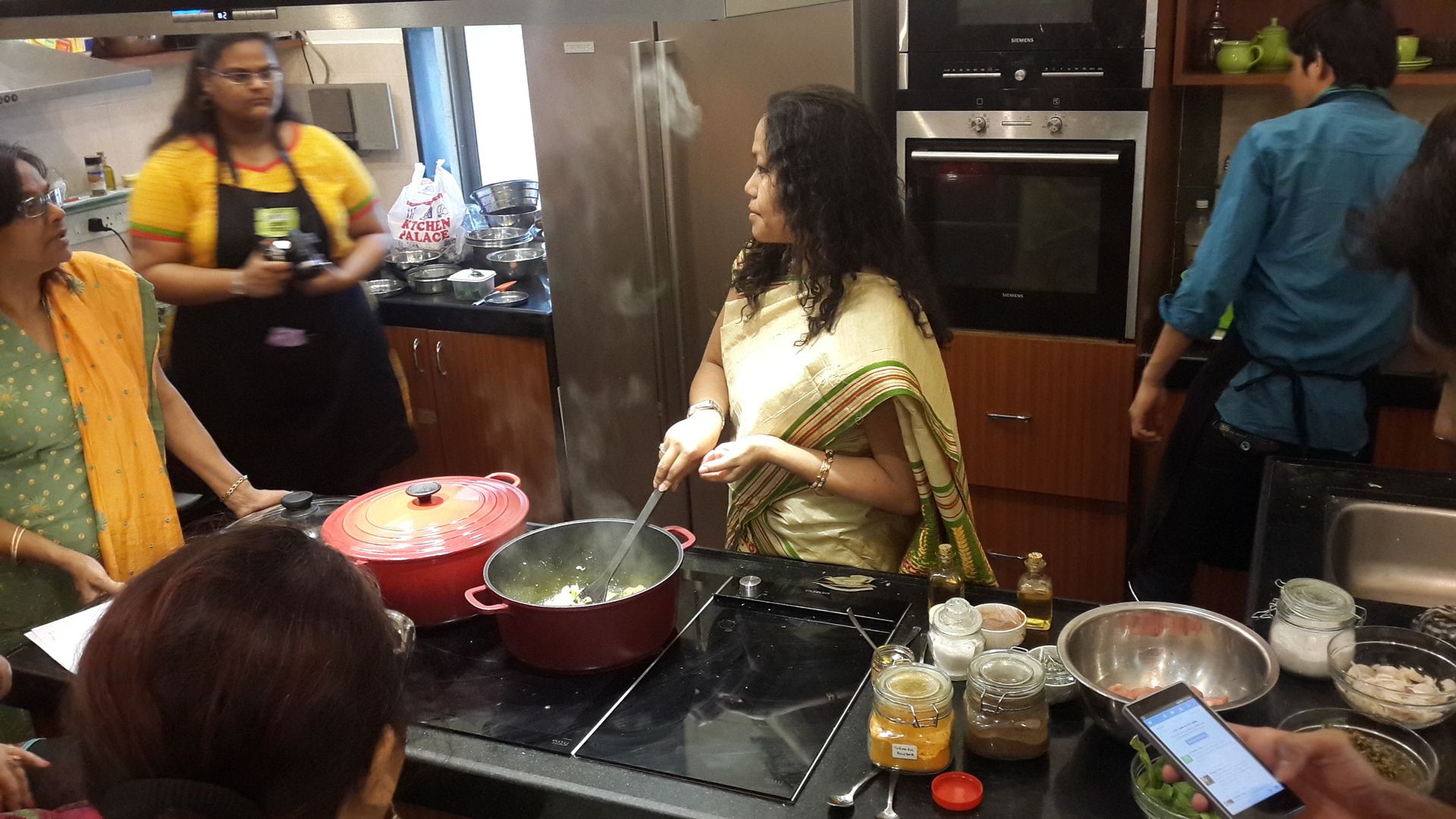
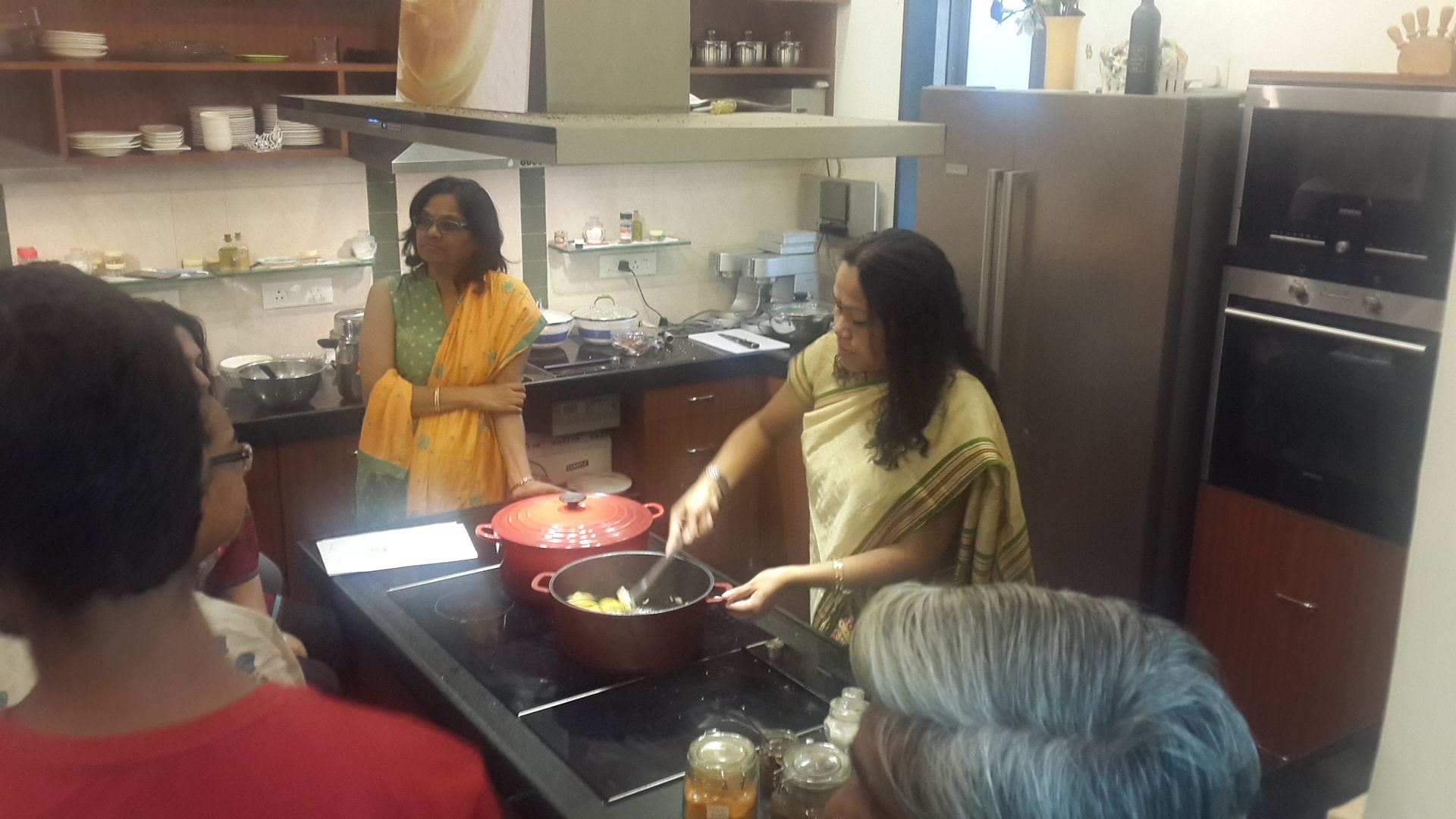
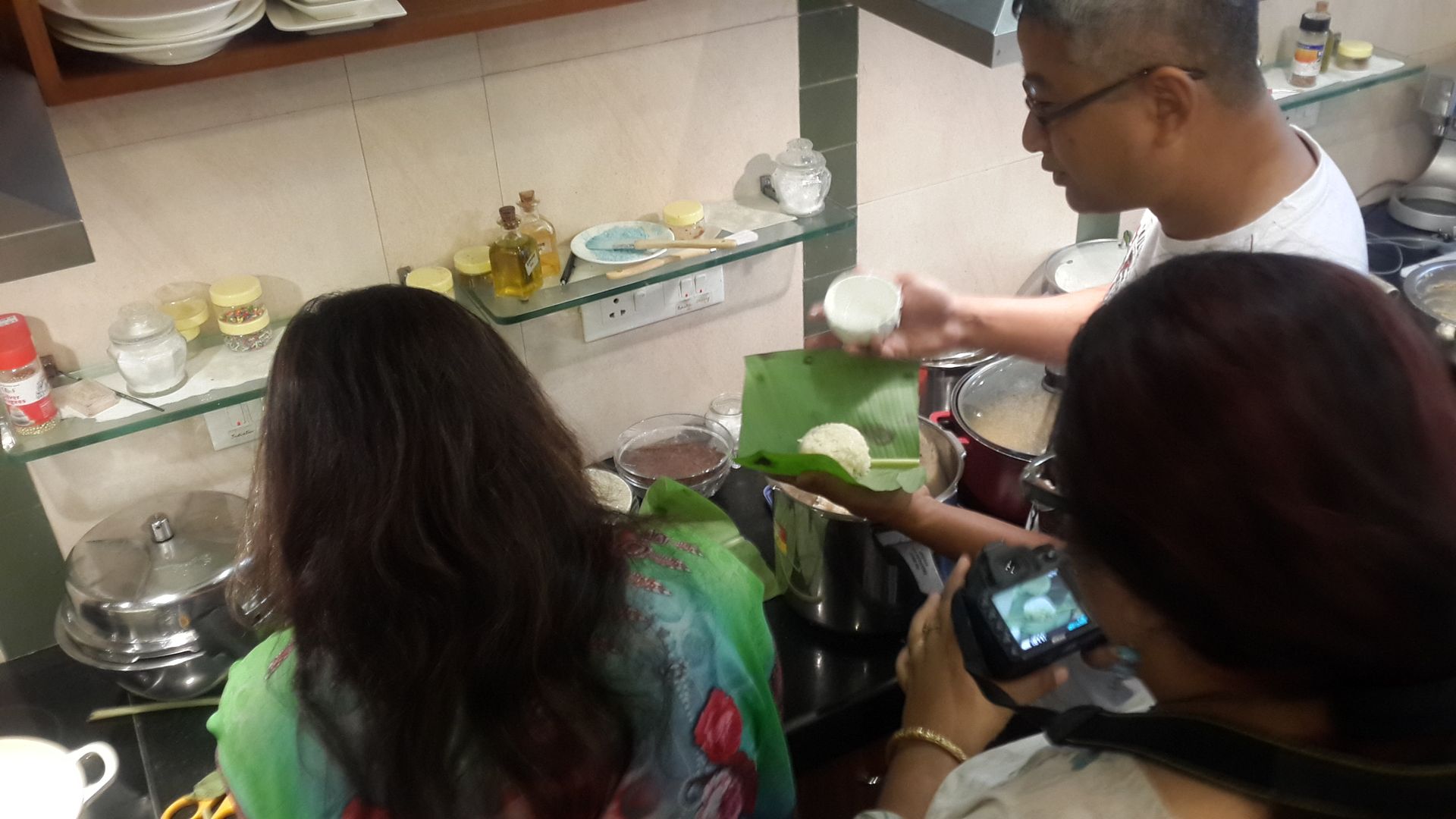
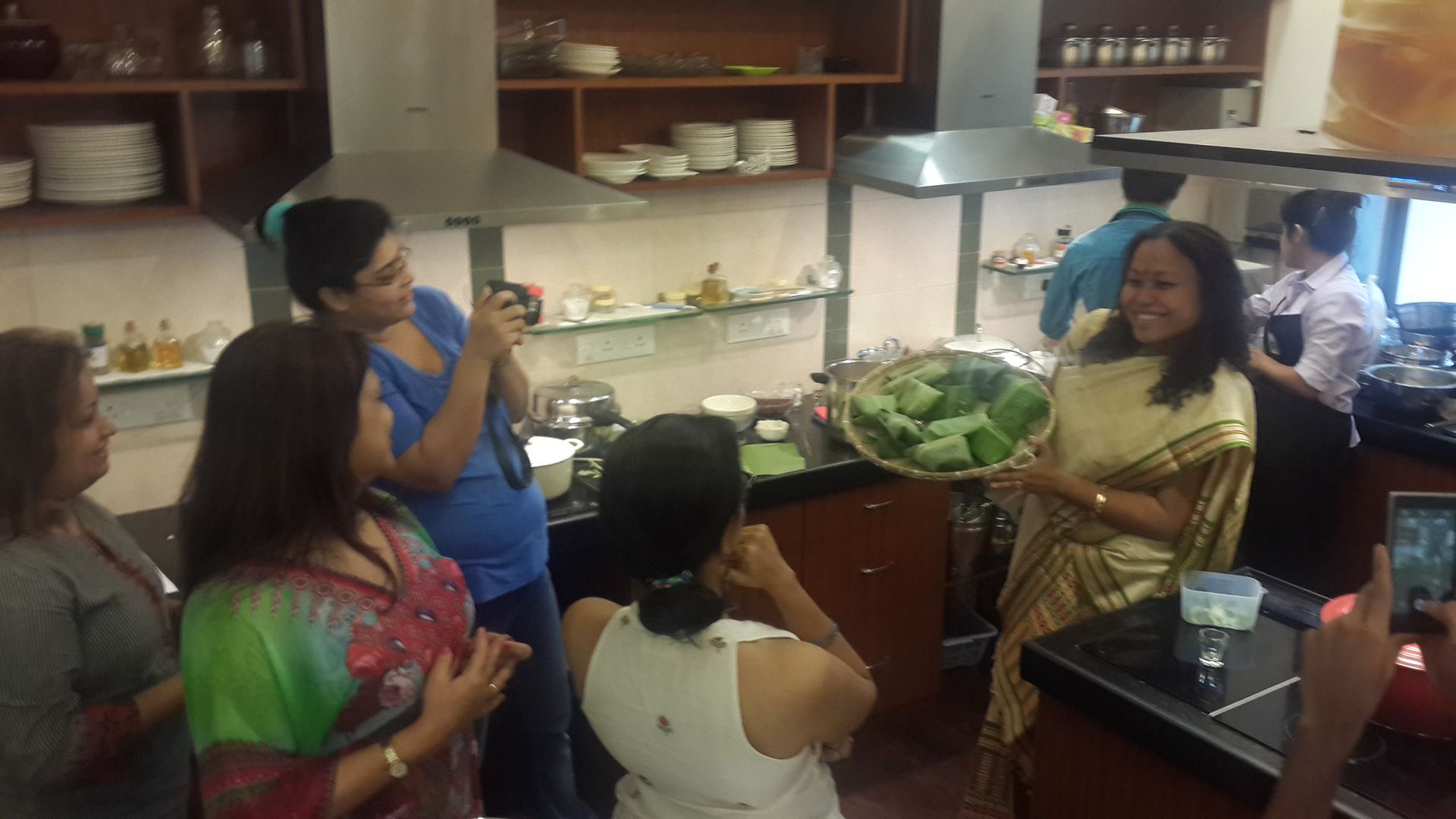
The event was conducted by renowned Assamese cook Gitika Saikia, who changed into her traditional Mekhele Chador before kick-starting the program.


She got right into it, starting with the Dau Jwang Sobai Jwang, a Bodo community dish where chicken is cooked with black dal.


As she demonstrated and taught us how to make this dish, she kept us enthralled and entertained with the history and folk tales of Assamese culture.


For those of you interested, here is the recipe of this dish. 


Dau Jwang Sobai Jwang - Chicken with Black Dal

For 4-6 people

Preparation time: 30 minutes

Ingredients:

500 gms chicken, skinless, curry cut.
100 gms black dal
Pinch of soda bi-carb
1 medium onion, sliced
2 tbsp ginger - garlic paste
1 bhut jolokia or 2-3 green chillies, chopped
Salt to taste
1 tbsp turmeric powder
2 bay leaves
2 tbsp coriander leaves
1 tbsp black pepper, freshly powdered
2 tbsp mustard oil

Method:

1. Boil black dal with pinch of soda bi-carb till cooked
2. In a kadhai, heat mustard oil
3. Add onion, ginger and garlic paste and sautĂ© 
4. Next add bay leaves
5. Add chicken pieces salt and turmeric powder
6. Let it cook till its juices are released
7. Add chillies and cover with lid for 5 minutes
8. Add boiled dal and mix it well
9. Cover with lid and let it simmer for 5-7 minutes
10. Sprinkle black pepper powder and chopped coriander leaves
11. Stir to mix and the dish is ready
12. Serve it hot with rice

Note: Assamese food is characterized by the use of an alkaline filtrate of ash obtained from burning dried fiber of plantain tree. This is used in place of soda while cooking and adds a distinct flavor to the cuisine.

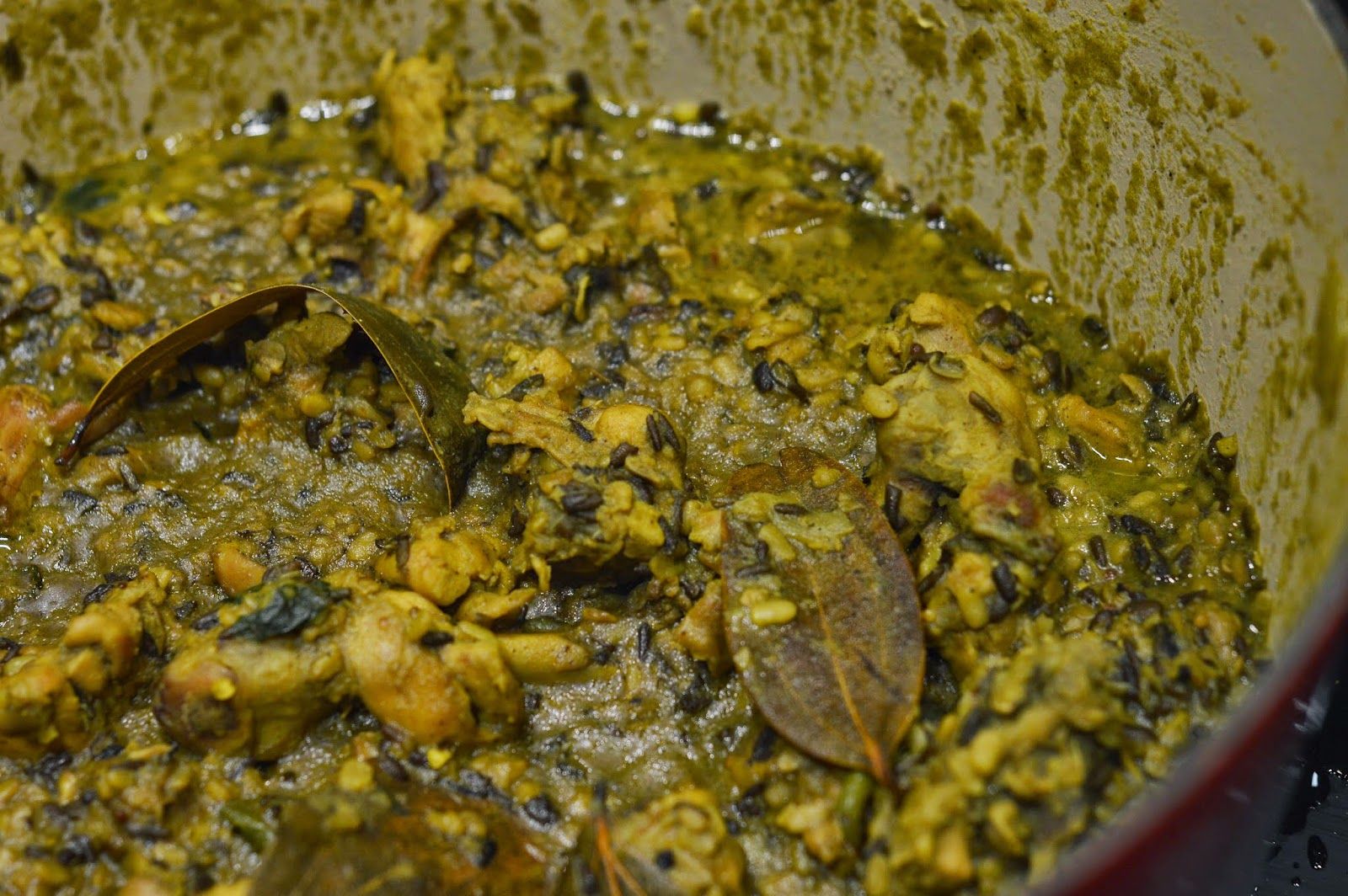
And here is how the dish looked like once it was ready [Pic source: Rhea Mitra Dalal’s food blog]


After that, we moved on to the next item – Dohnaiiong, a special pork dish made in black sesame gravy, a delicacy from Meghalaya. Again Gitika made the dish from scratch, while occasionally pointing out how pork is one of the favorite food of most Northeasterners. Here’s the recipe:


Dohnaiiong - Pork with Black Sesame

For 4-6 people

Preparation time: 30 minutes

Ingredients:

500 gms pork belly, boiled and cubed
100 gms black sesame, roasted and powdered
1 medium onion, chopped
2 tbsp ginger-garlic paste
3 green chillies, chopped
1 tbsp red chilli paste
Salt to taste
1 tbsp turmeric powder
2 tbsp mustard oil

Method:

1. Heat oil in a kadhai
2. Add onion and fry well
3. Add ginger-galric paste and sautĂ© 
4. Add boiled pork, chillies, salt and turmeric
5. Leave to cook for 10-15 minutes till fragrant
6. Add mixture of black sesame powder and water
7. Cover with lid and cook on low flame for 2-5 minutes
8. Occasionally stir in between
9. Dish is ready to be served with plain or sticky rice

And here is how the dish looked like once it was ready - 


After that, we were ready to dine feast!

The rest of the menu had been prepared in advance because you can’t expect someone to make everything right on the spot as that would have taken a lot of time. Here is the entire menu:

Pasa from Arunachal Pradesh: A thin, fish soup with herbs
Mosdeng Serma from Tripura: Chutney made of fermented fish, tomatoes and herbs
Eromba from Manipur: Vegetable with fermented dry fish
Akhuni or Axone from Nagaland: Fermented soya bean chutney
Bai from Mizoram: Dish made by mixing veggies, bamboo shoots and rice
Dohneiiong from Meghalaya: Pork cooked with black sesame in light gravy
Dau Jwng Sobai Jwng from the Bodo community of Assam: Chicken cooked with black dal


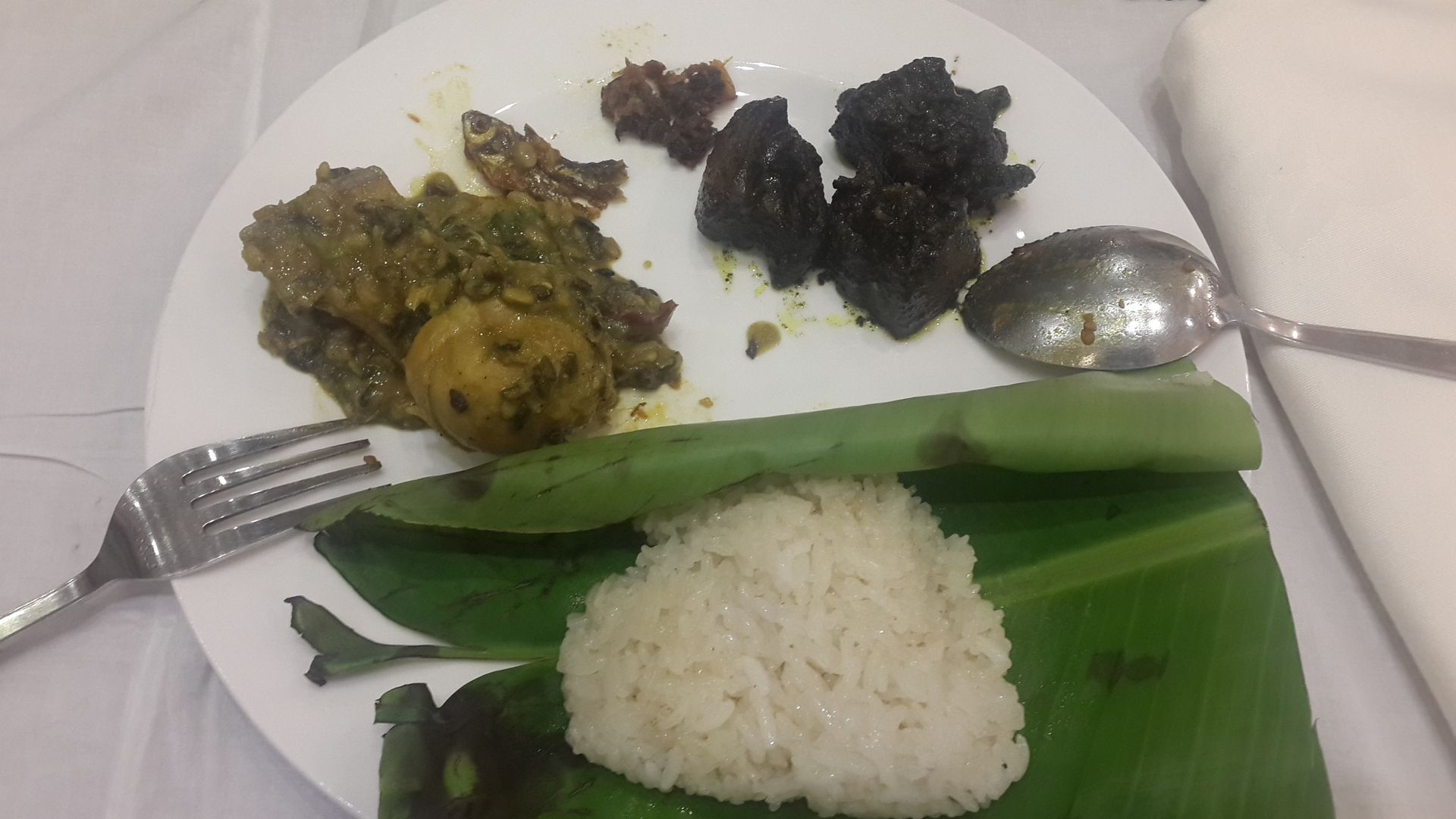
For the base, we had sticky rice which is also popular in the North East. This is how it was served -


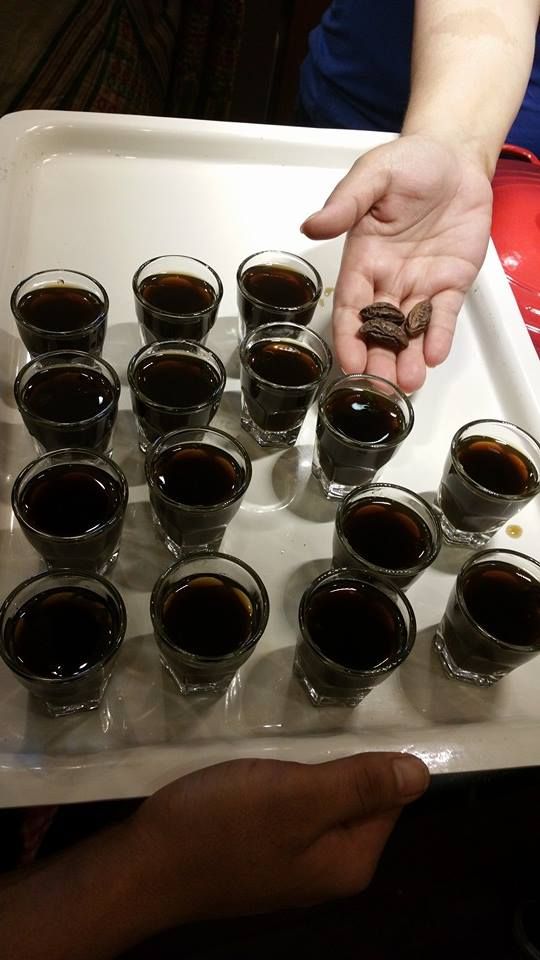
For appetizers, we were served this delicious drink made from amlakhi (amla) and hilikha (haritaki). 


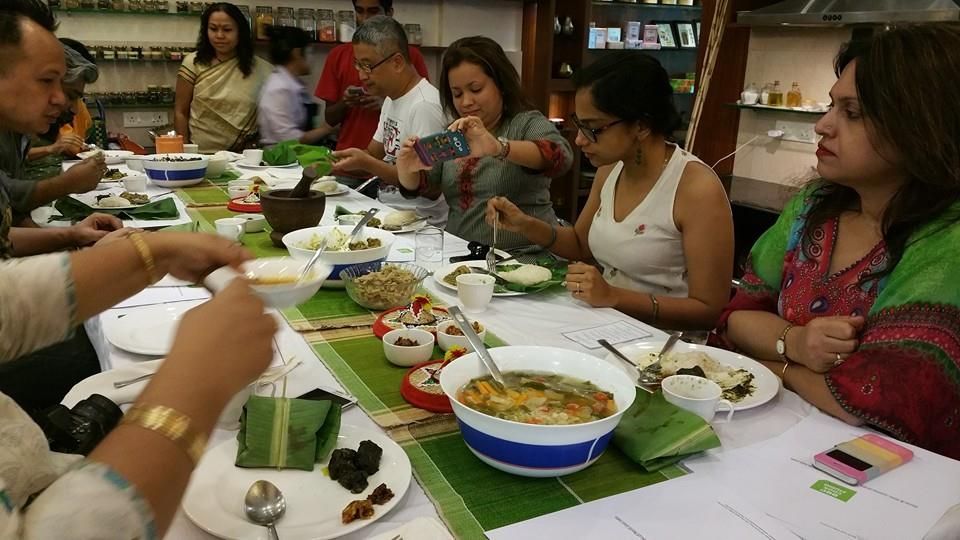
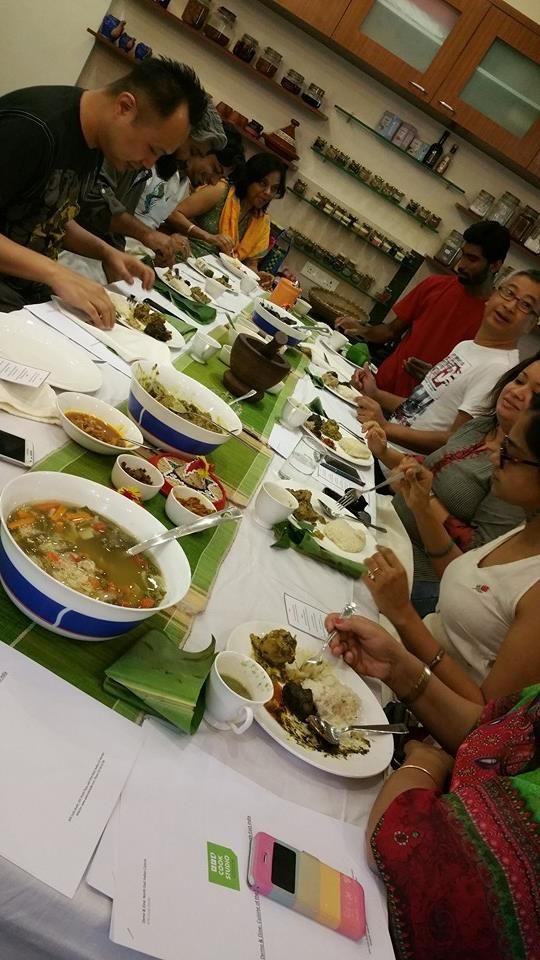
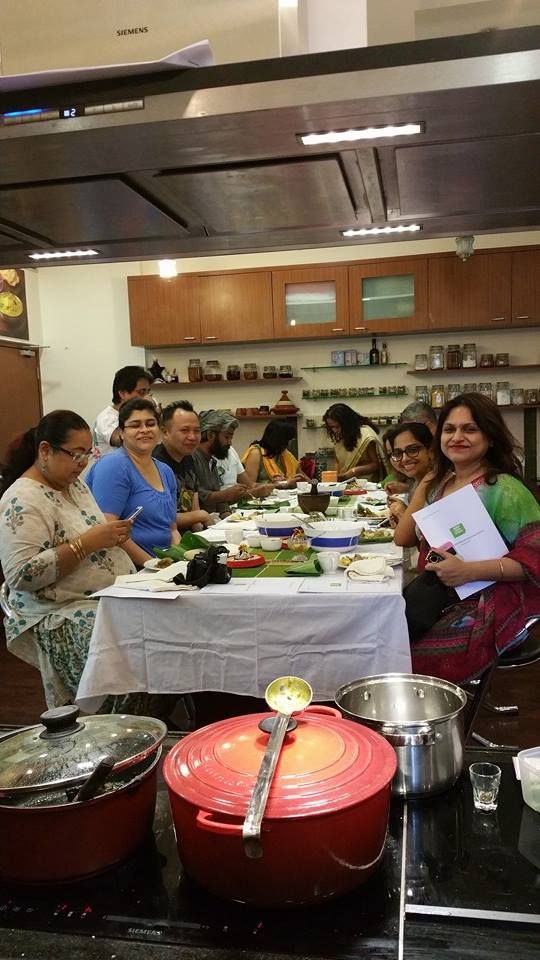
A very refreshing drink indeed. After that, we all sat together across the table.

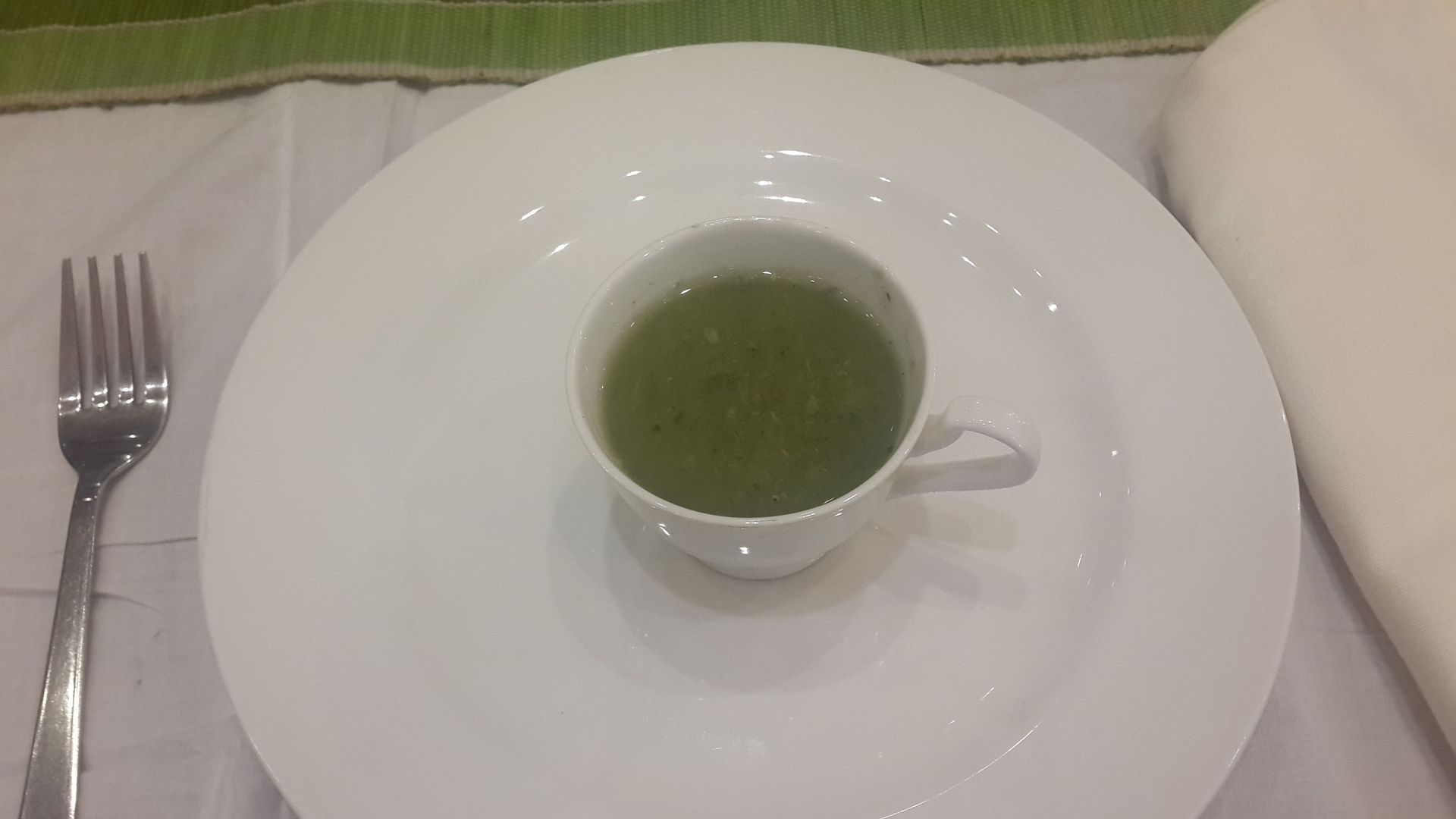
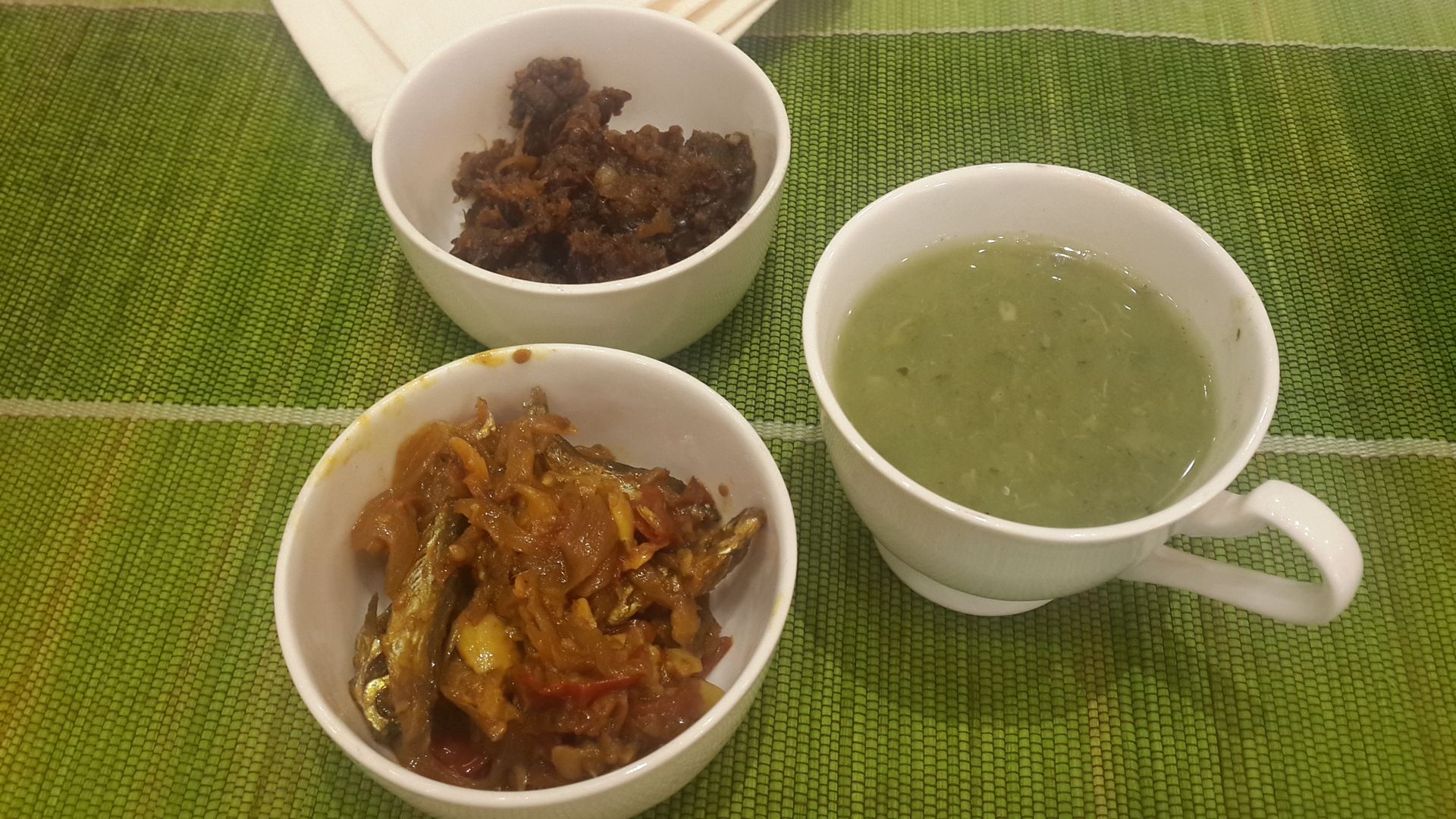
First up, was the Pasa, a thin, fish soup with herbs from Arunachal Pradesh.


The taste was divine. The side-serves were also placed in front of us. These include the Mosdeng Serma and Akhuni.


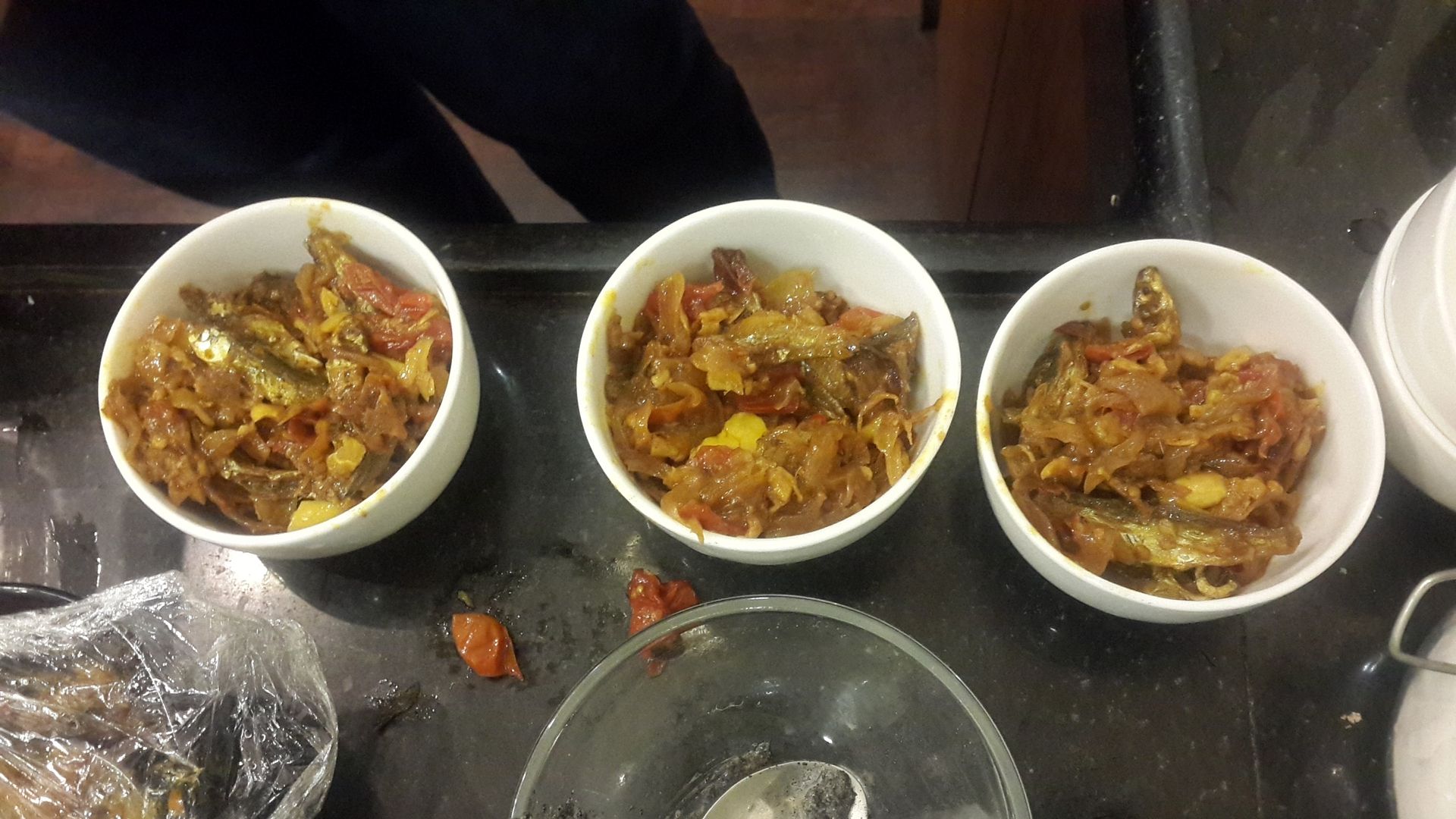
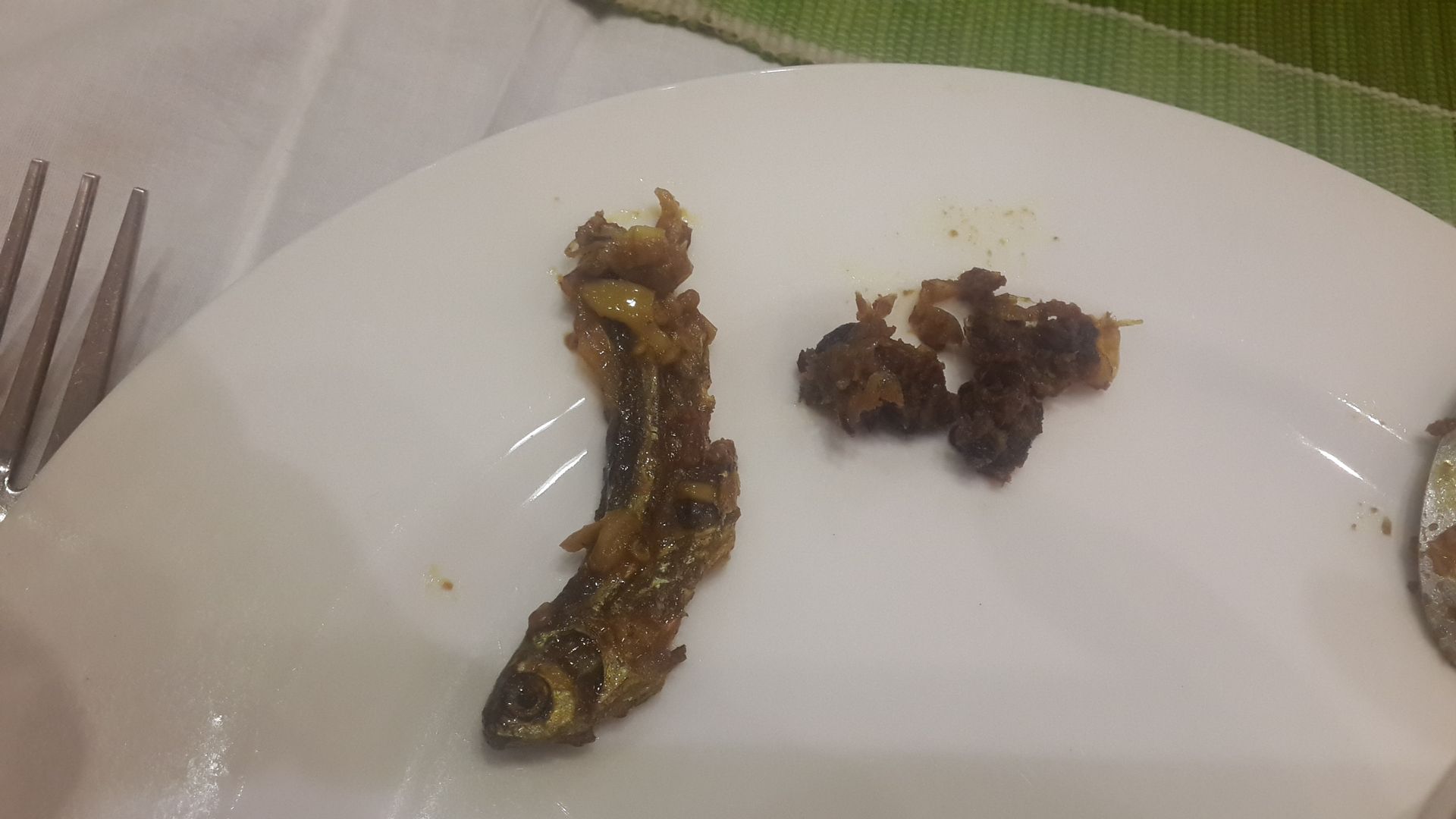
As you can see below, Mosdeng Serma is a fermented dried fish popular in Tripura, and Akhuni is a fermented soya bean chutney popular in Nagaland. We Mizos too have side dishes very similar to these two, with slight variations in taste and method of preparation.


One thing is certain, the preparation of such fermented dishes can be quite… how do I say it… a pungent experience for the untrained nose :) Maybe that was also one of the reasons why Gitika prepared these two dishes well in advance? :D

Soon, the table was filled. Below is Bai from Mizoram. I proudly exclaimed, “Yayyy that’s from my state”, and everybody applauded :P


Yummy food all around…


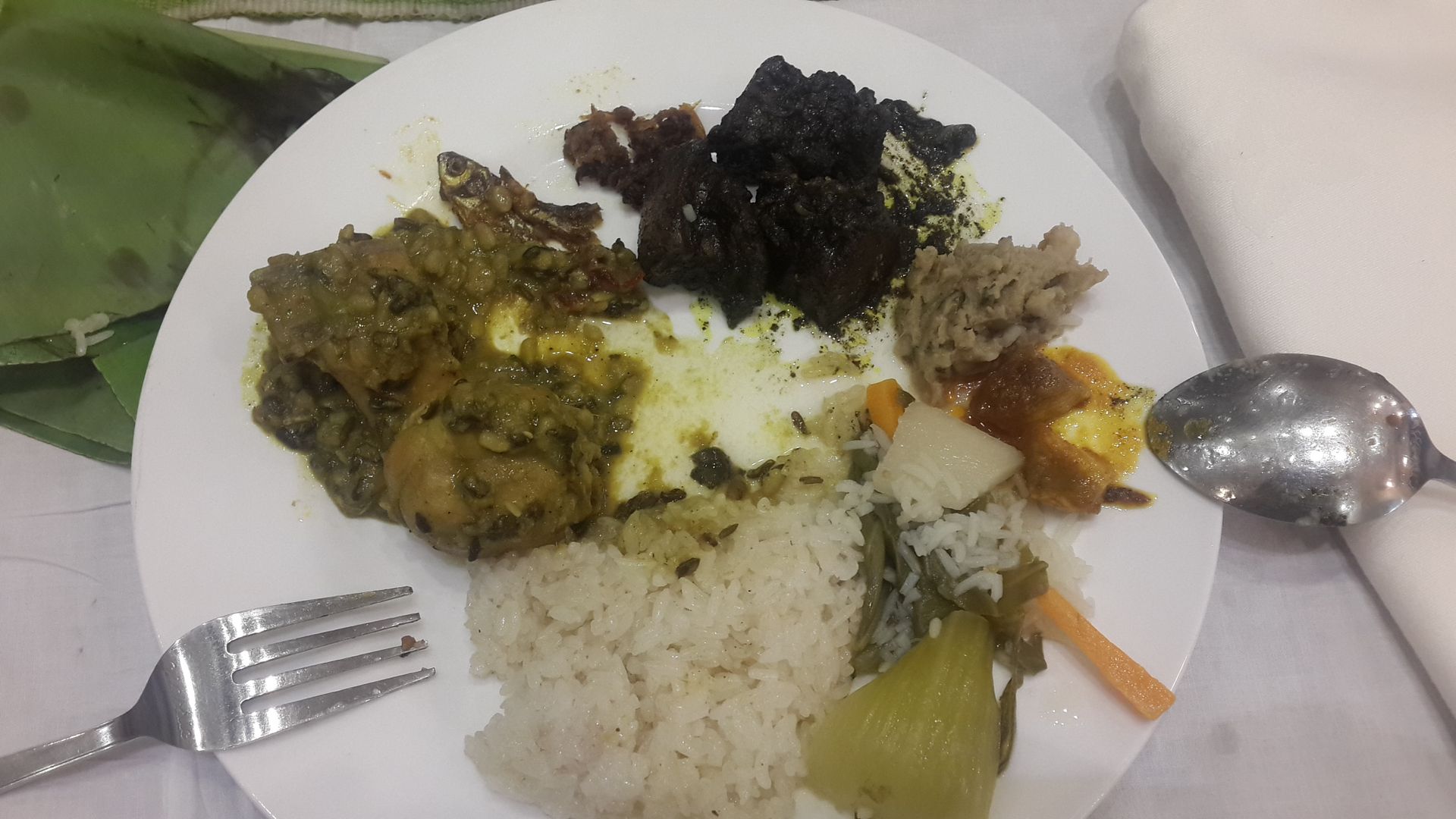
A POV look of my plate (by the way, click on all photos to enlarge at a new tab).


The white chutney paste you can see is the Eromba from Manipur. There are different types of Eromba, and the one we had yesterday consisted of mashed vegetables, bamboo shoots and fermented fish known as Ngari

After many more servings and spoonfuls of scrumptious delicacies, I was stuffed. And once everybody had their full, dessert was served.


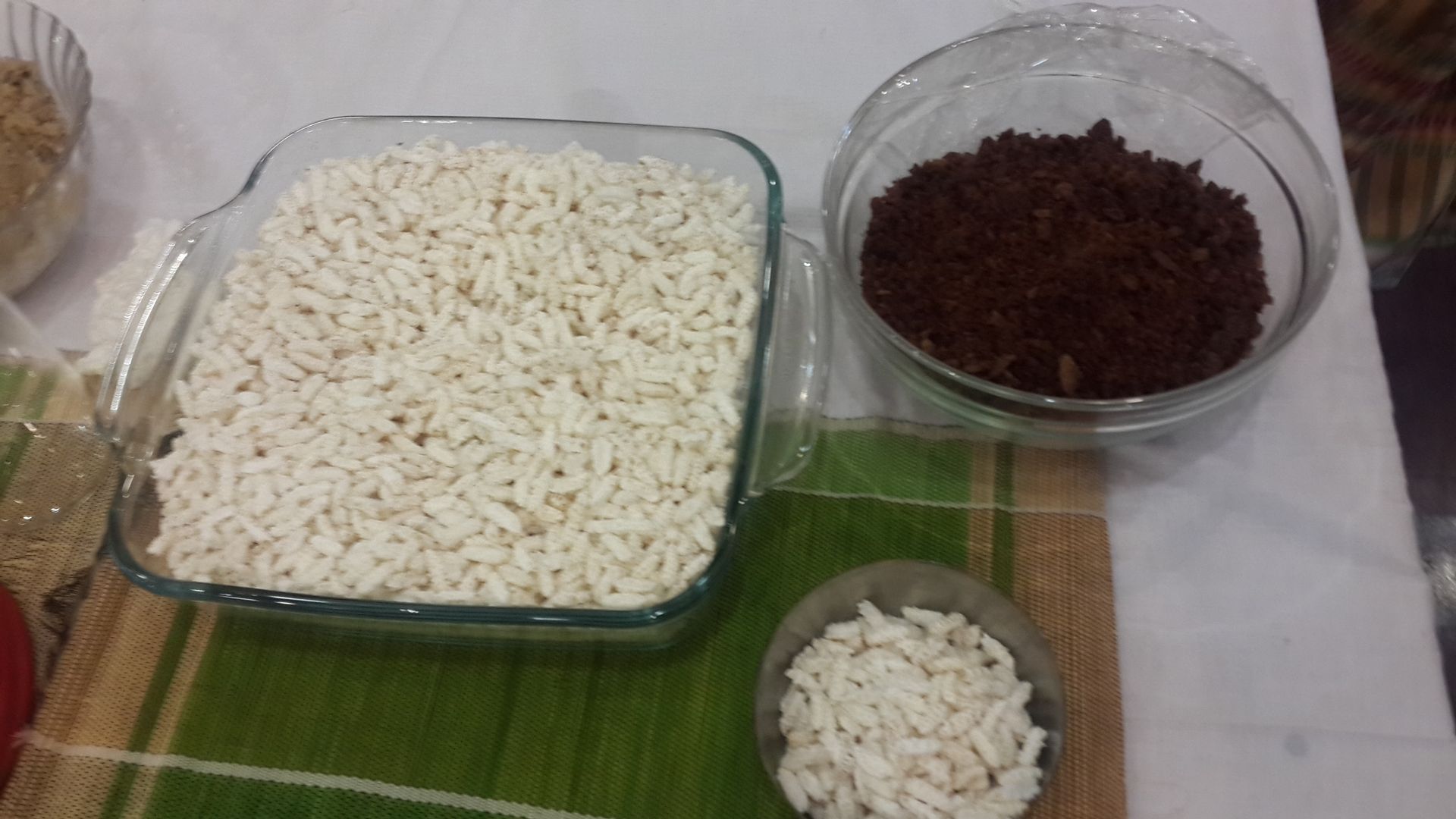
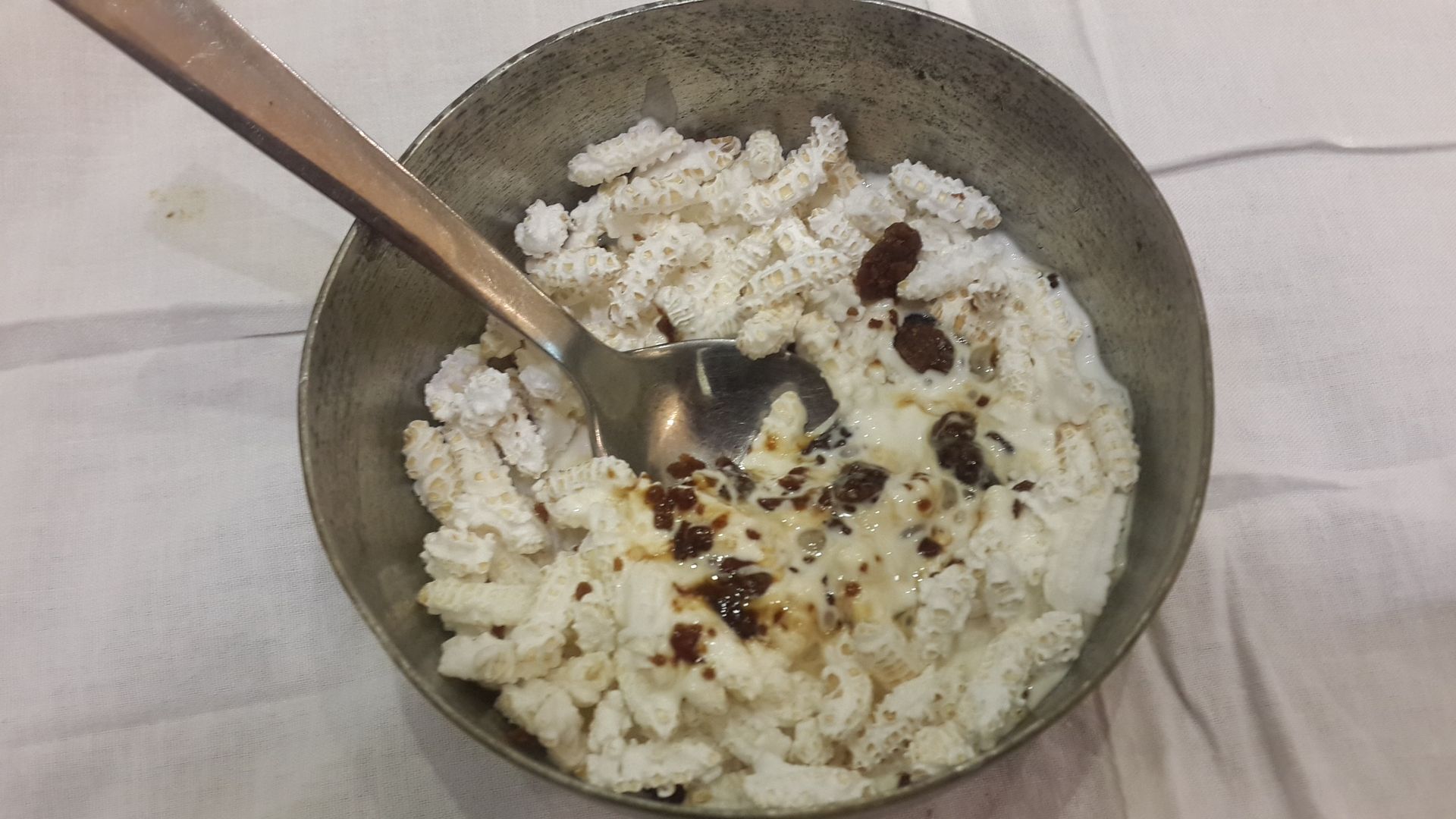
Dessert consisted of puffed rice and small portions of Gitika’s own home-made jaggery. This was mixed with Amul fresh cream, and oh the taste was heavenly. Subtle sweetness went down smoothly and settled down with the spicy pork and chutneys I just had.


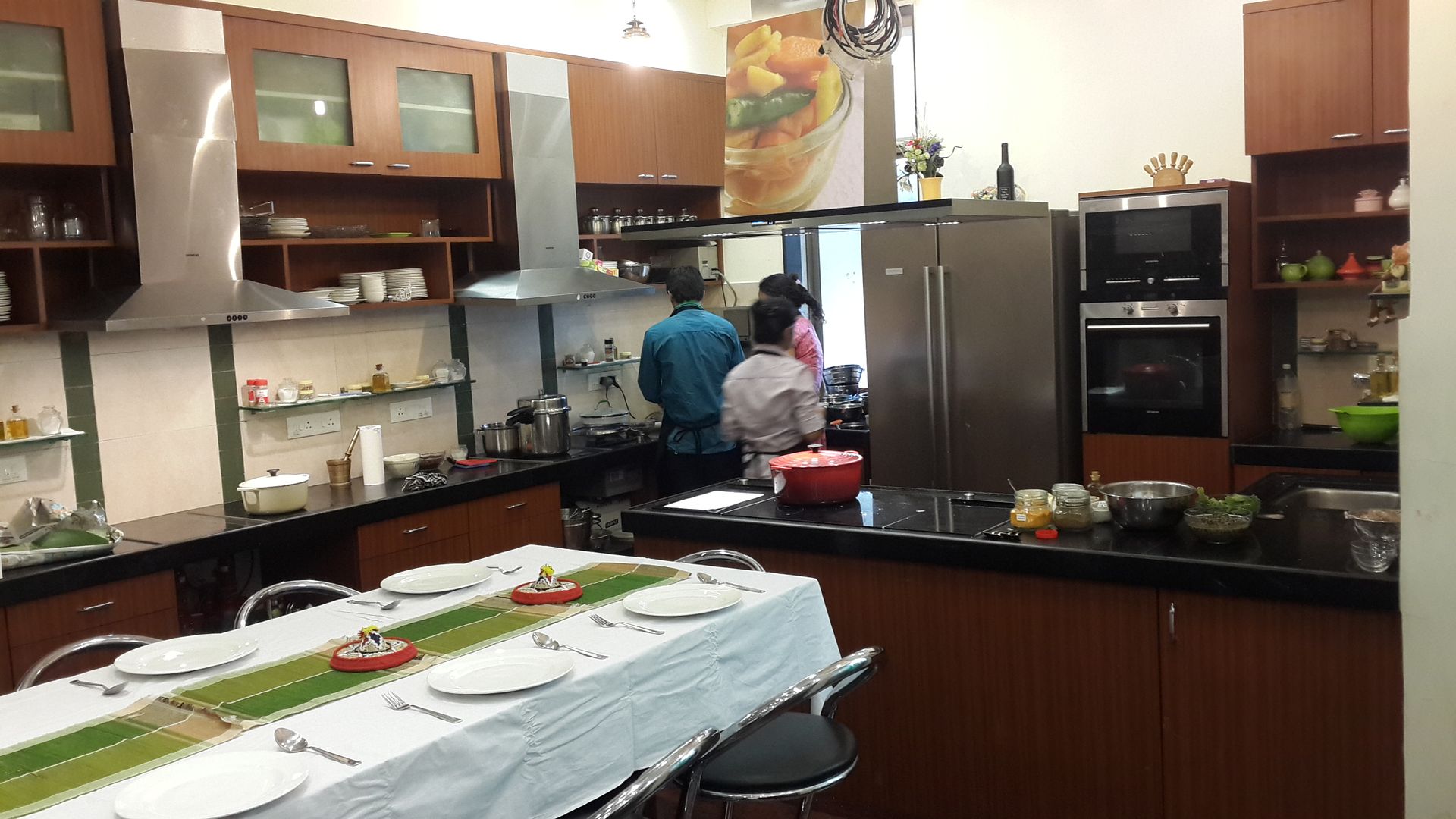
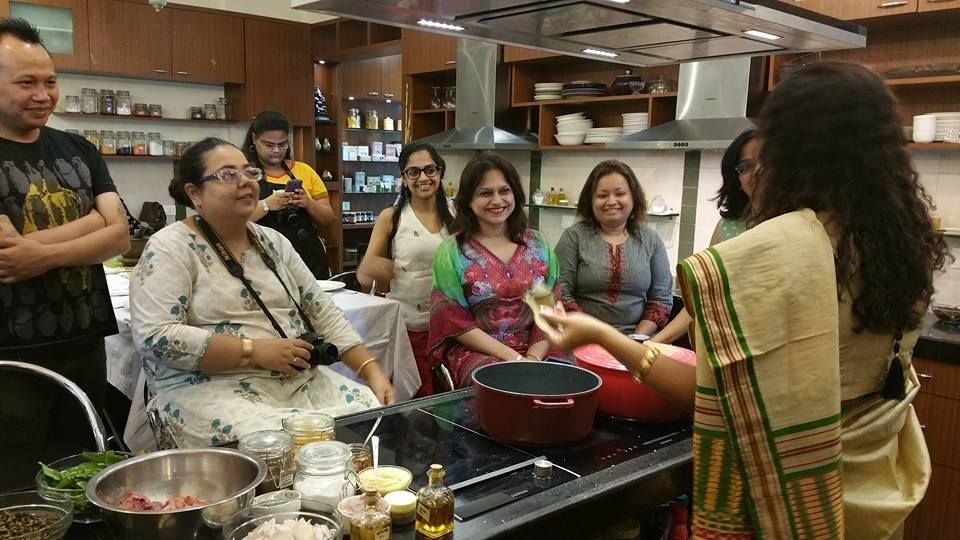
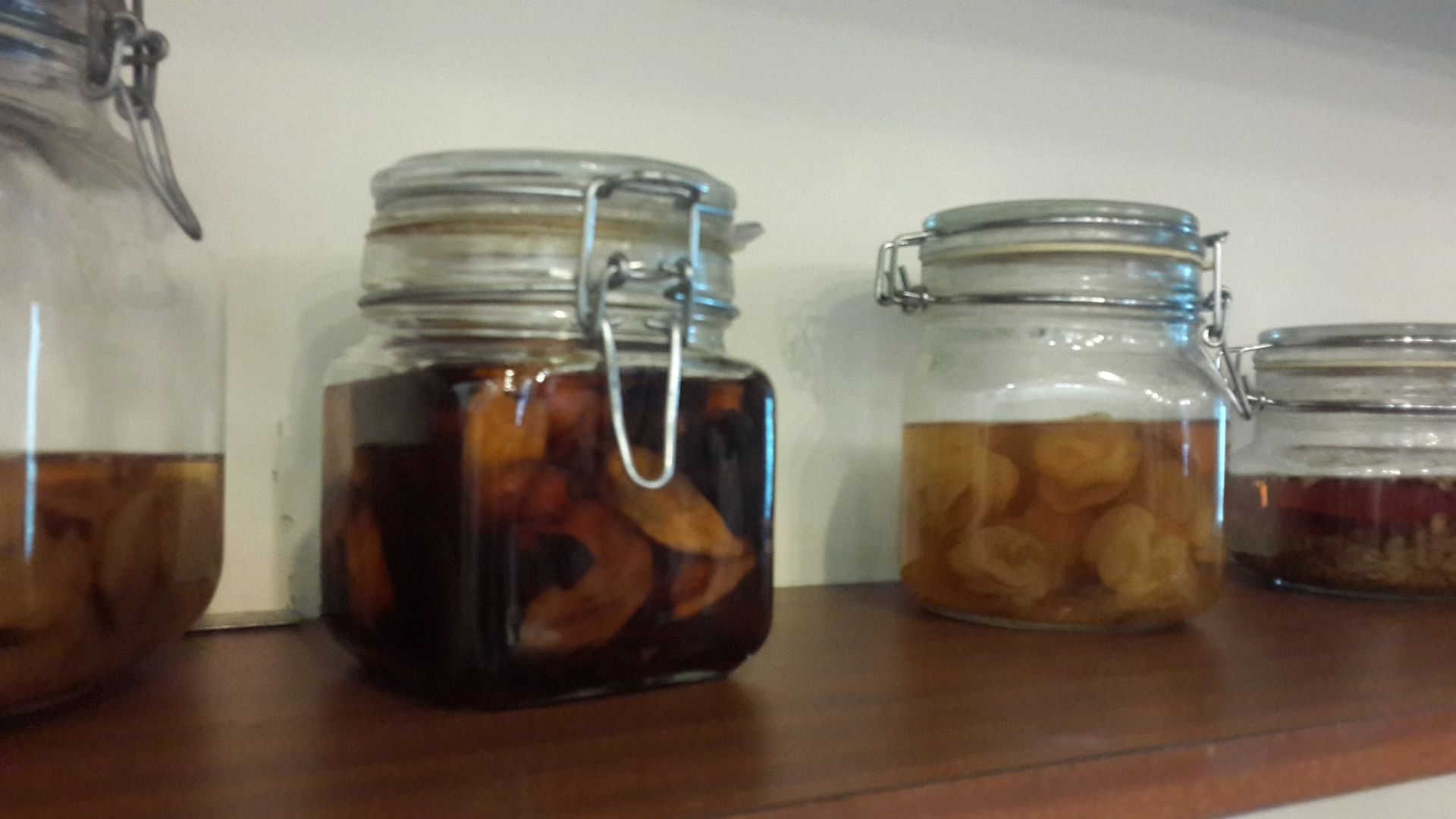
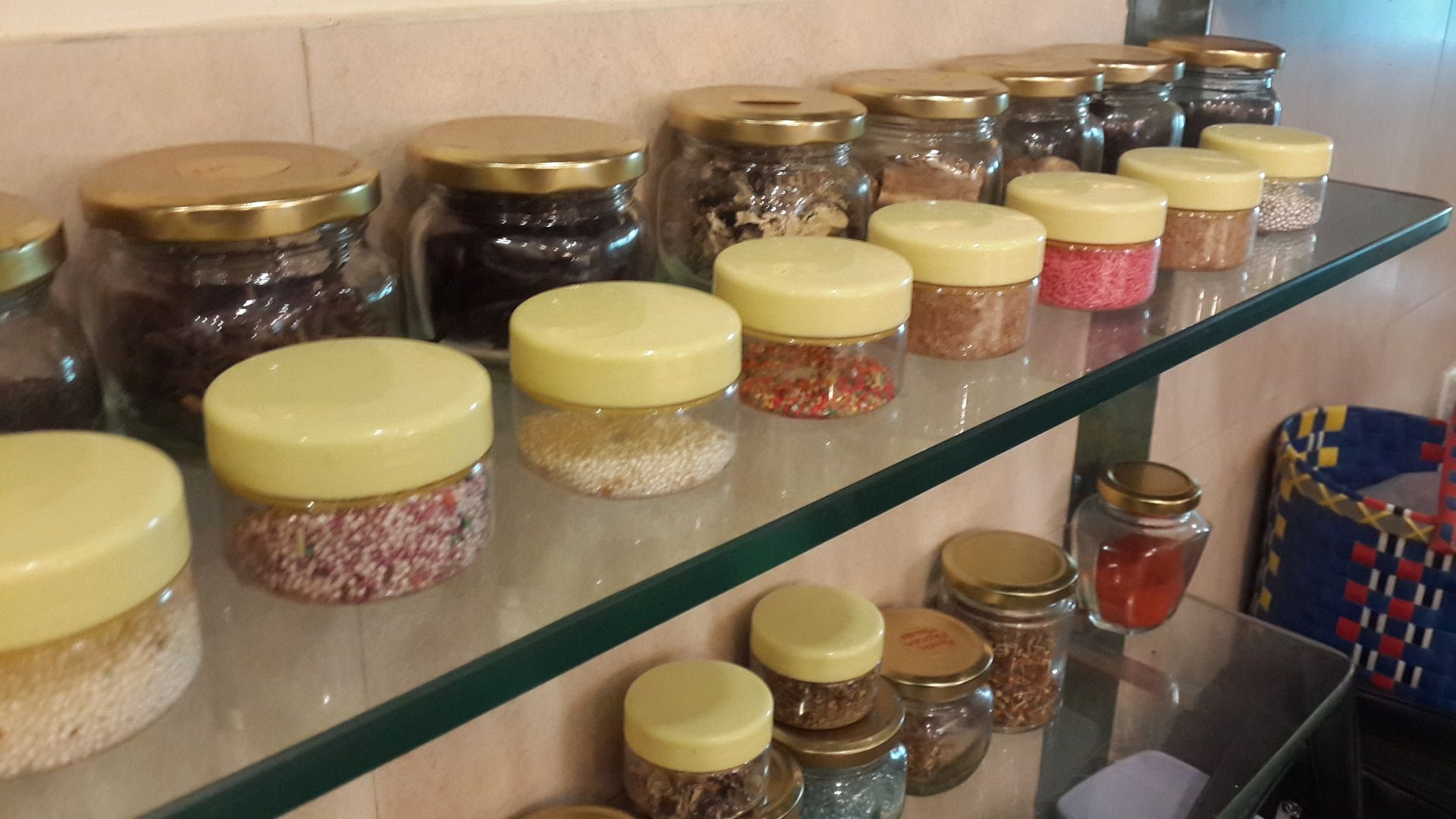
The ambience at APB Studio was awesome, and there were a lot of sample containers all around the studio, making it a true foodie’s haven.


Rushina also mentioned that APB Cook Studio conducts corporate cooking programs, cooking competitions, and various other cooking related events.

Once we were all done eating, we spent a lot of time sharing and chatting, mostly about the North East, so I definitely had a field day telling the others about our different cultures and practices. The digestion of food also became a cultural digestion as well. (did I just say that? :D )

The discussion topic also turned to some of the ingredients used in preparing the food that we just ate.


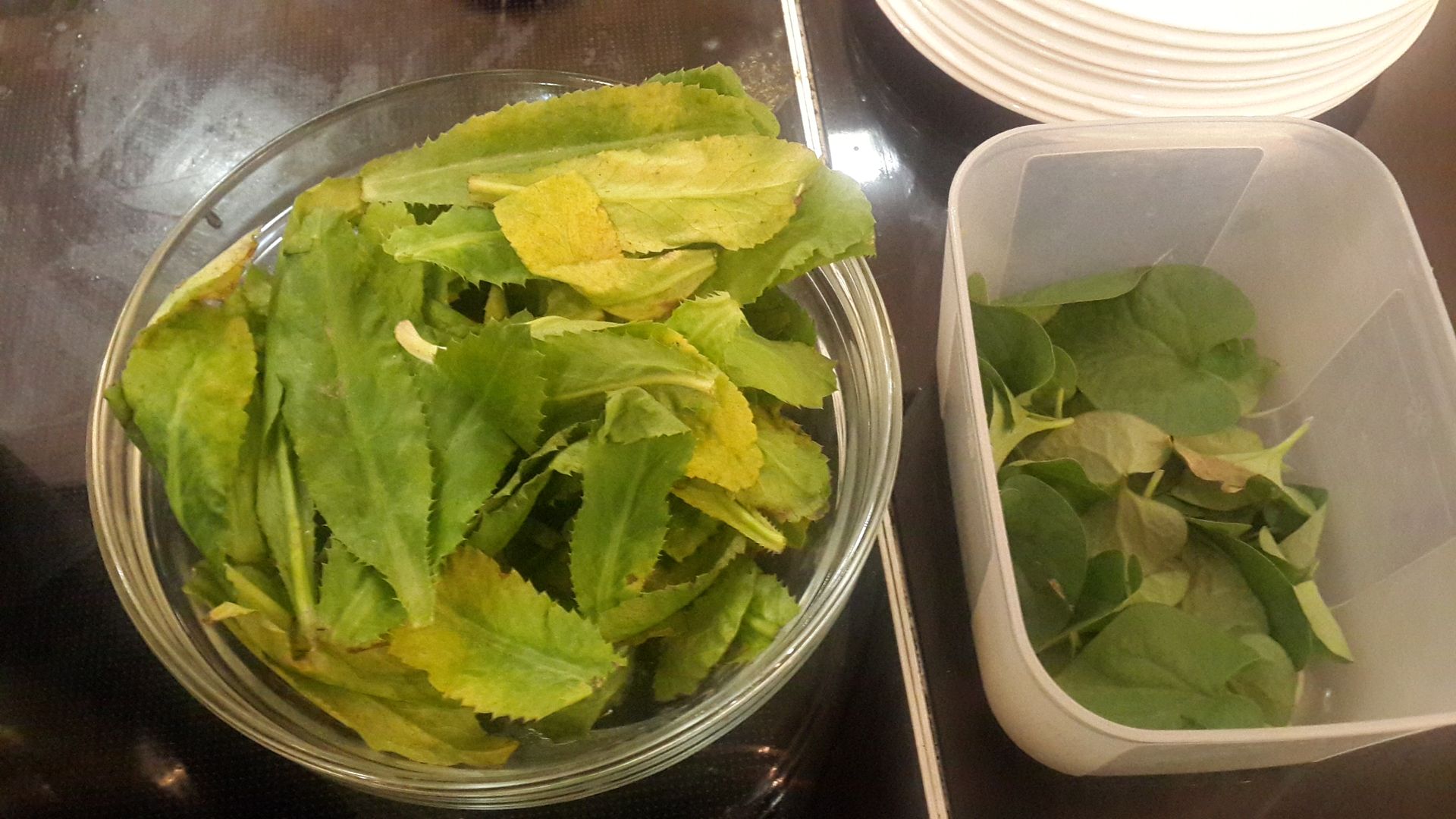
The above leaves are called “bahkhawr” in Mizo, but unfortunately I didn’t know the English name. It is a popular veggie dish or veg condiment in our Mizo society.

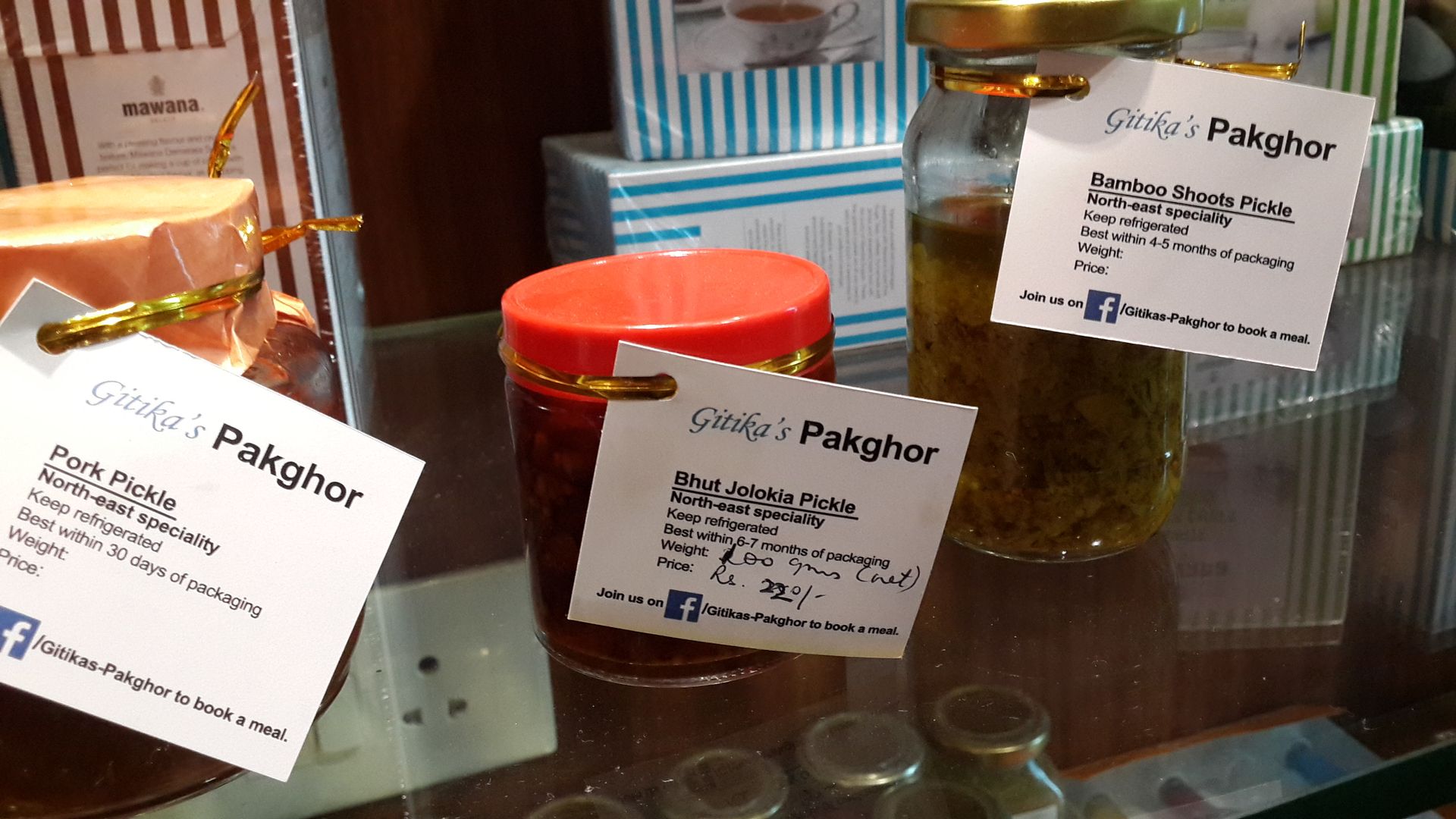
Gitika too bought her own bottles of pickles to sell.


I bought a bottle each of Pork pickle and Bhut jolokia, aka Naga chilli aka Raja mirchi aka Ghost pepper among many other names. It was the world’s hottest chilli for many years, but recently moved down to third place [source]


Nevertheless, it is still SPICY as hell! To give you an example of how hot this chilli is, here is a real life experience - I was once travelling from Aizawl to Delhi with my friend Michael Pautu. There was no incident on our Aizawl to Kolkata flight. But on our connecting flight from Kolkata to Delhi, the security guard detected a bottle of Bhut jolokia pickle in Michael’s hand baggage. Even though it was properly sealed, they immediately confiscated it. When we protested, they told us that extremely spicy chillis like Bhut jolokias are banned from carry-on baggage in flight because they can be weaponized and made into a bomb!!!! 

And all this time, I though the only explosion Bhut jolokia can cause is in the loo :D

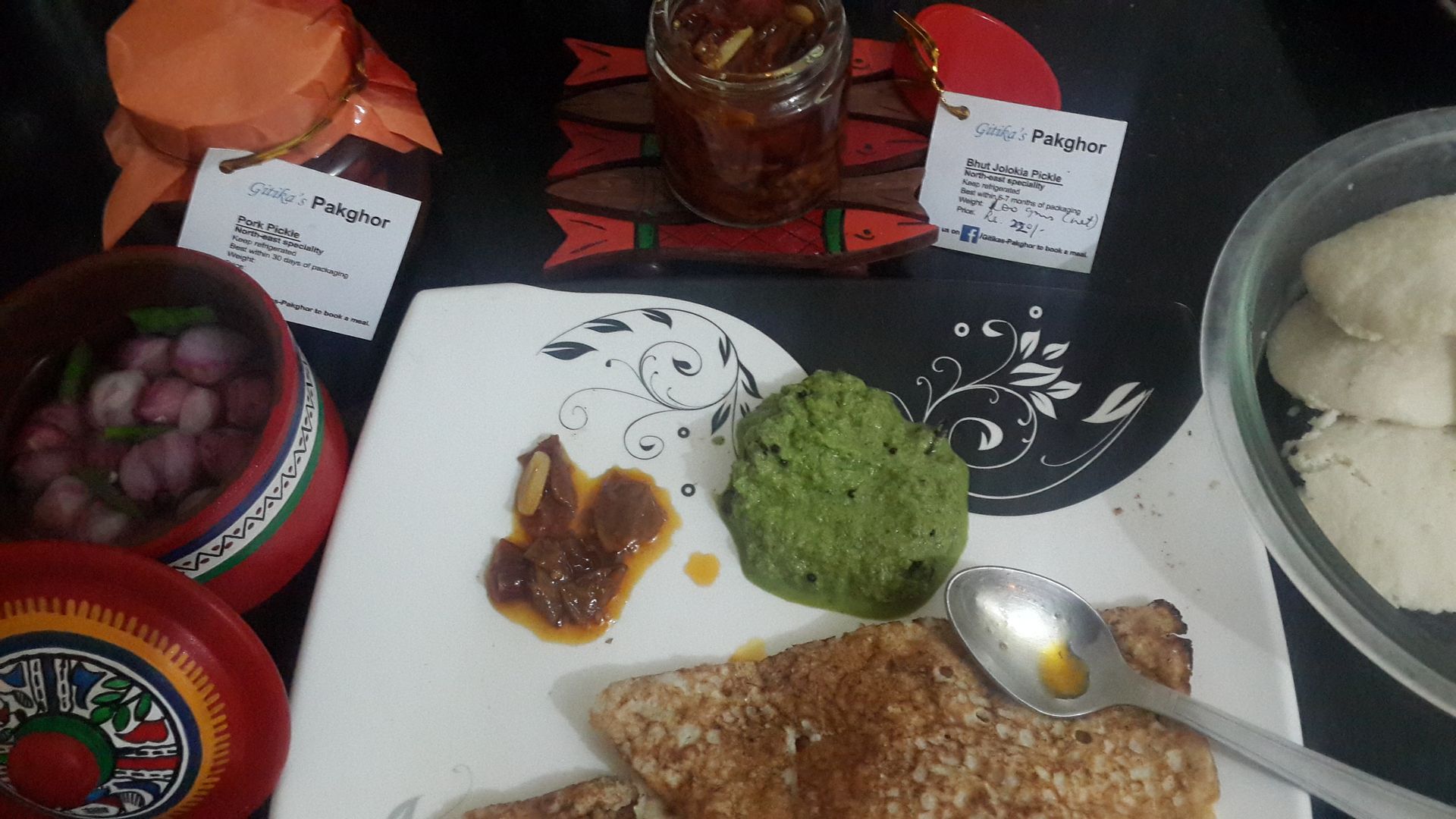
Here is me having this awesome chilli for breakfast today along with home-made dosas and coconut chutney. Ahhhh the flavor blend was amazingggg!


Hoping to see such activities again soon. I had a truly awesome time. Thank you Rushina and Gitika!


Ps. I’d just like to quickly point out here that when I shared about this event on Facebook, a few people, mostly Northeasterners, criticized me because the entry for this event was priced at Rs. 2500 per head. First of all I’d like to say that I am not a part of the organizers and I had nothing to do with the cost :) Secondly, I can see from a Northeasterner’s point of view that spending 2500 for food they can easily make at home is atrocious. However, let me point out that the target audience for this event was actually non-Northeasterners who had never tasted Northeastern food, somebody who likes to experience different cultures, learn new cuisines and explore a less taken path. Apart from that, the cook not only prepared the dishes but taught the participants how to make them and personally interacted with everyone, explaining in detail about what to add and why. It’s not a typical restaurant model. And then there was the cost of infrastructure, manpower, electricity etc etc. I think 2500 is a reasonable cost if you take all that into consideration.


Monday, October 27, 2014

Chp 534. Separatist movements of North East India


My answer to a Quora question:

What does the world think about the separatist movement by the indigenous tribe of Northeast India?


Thank you for the A2A, but I must admit, this is a very generic question so I don’t think I’ll be able to give you a satisfactory answer. You'll have to understand that there are over 300+ different ethnic tribes and communities in the North East, all speaking different languages or dialects, and most of them have their own issues which may or may not be similar to the issues of other ethnic groups.

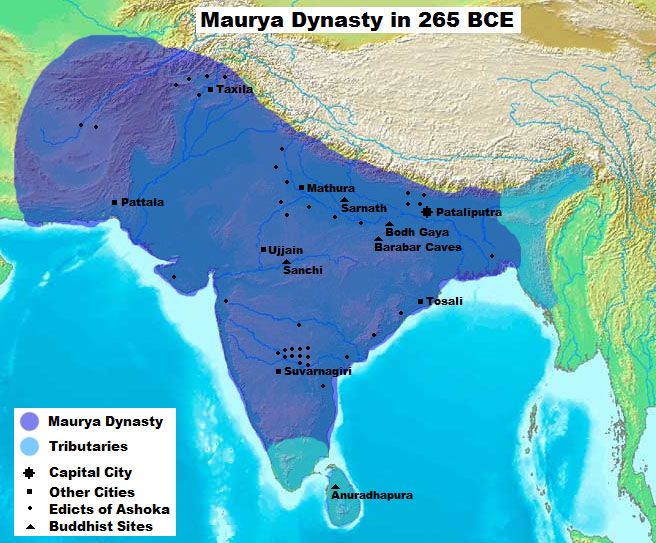
India had been, on many occasions, governed by the same ruler - like the Mauryan empire, Gupta kingdom, Chola dynasty, Pala empire, Tughlaq sultanate, Mughal dynasty, Maratha empire etc who ruled vast areas of present day India.


But as far as my knowledge on history goes, what is now “the North East” was never occupied by any of the large empires and dynasties (other than the British) that had ruled over what is now India in the past. Do correct me if I’m mistaken though.

At the western frontier, the Ahom Kingdom of Assam had successfully resisted the mighty Mughal expansion for many generations. Likewise, the once powerful Twipra Kingdom of Tripura too fought Islamic conquests relentlessly. And on the eastern frontier, the Kingdom of Manipur waged many wars with the Burmese Kingdom. The Ahom dynasty finally ended with the Burmese invasion of Assam in 1817, which was then subsequently annexed by the British East India Company. After that, it wasn’t difficult for the British to conquer the other Kingdoms that had grown weaker due to consistent wars, and the other smaller fiefdoms and chieftains of different tribes and communities scattered all across the nearby hills and valleys too fell under the Union Jack.

However, I don’t want to go too much into history as I am not a history buff, and many of us cannot trace back our heritage that further back. Like I said, I may be mistaken about some of the historical facts I’ve mentioned earlier too. Let’s deal with the present situation because that is what matters. The question is about the separatist movement by the indigenous tribe of Northeast India, and I’ll get right to that.

First of all, every Northeastern State has their own story to tell. In the case of Mizoram, the reason for the rise of insurgency was because of neglect from the Indian Government. You can read more about this in my Quora answer: What do people of Mizoram think about the rest of India? To keep a long story short, here is a gist of our insurgent history - After the British left, a terrible famine hit the region and no assistance was given by the Indian Govt and a lot of Mizos died, so everybody said they didn't want to be under a country that didn't care about its people and the entire region under the MNF rebelled, beating back the Indian army, so Indira Gandhi ordered the Air Force to bomb residential areas and then fighting between the MNF and the Indian army continued until the Peace Accord was finally signed in 1986, bringing in permanent peace to the State (*gasps for air*). For a more detailed answer, please do click on the link mentioned above.

Having said that, that was just the case with Mizoram. Other states have different reasons for rebelling. For example, leaders of the Mizo Union political party of Mizoram (which was known as the Lushai Hills district back then) agreed to become a part of Assam rather than Myanmar when the British said they were leaving and the Mizo insurgency happened only after the famine in 1958, but in the case of Nagaland, Naga Nationalism had been popular and growing strong even while the British were there. Many researchers attributed the Second World War to having a significant impact on Naga Nationalism because as we all know, the war was fought right on the doorsteps of Kohima, hence affecting many Naga tribes. The war and rehabilitation process further united many Naga tribes, especially when they came to possess many weapons left behind by the defeated Japanese army. Hence Naga insurgent groups had been fighting for a sovereign country right from day 1 of India’s Independence. Likewise, other States have different backgrounds and causes.

But the BIGGEST misconception people have about the violence in the North East is that, most people think all these insurgent groups are fighting for separation from India.

No they’re actually not.

Sure, some of them do, like how the various factions of the NSCN (National Socialist Council of Nagaland) are fighting for a sovereign Nagalim (Greater Nagaland) consisting of areas inhabited by Naga tribes (this includes Nagaland and large regions of Manipur, Assam, Arunachal Pradesh and even Myanmar). Again it has to be mentioned that Naga insurgent groups are not only fighting against the Indian government but even among themselves due to different ideologies and at times because of inter-tribe/clan rivalry.

Also try to keep in mind that all the insurgent groups I’m mentioning here may claim to represent their particular community, but keep in mind that not every person from that particular community accepts it as their representative or believes in their ideologies. It is pretty much like the Islamic State (formerly known as ISIS/ISIL) claiming to represent all Muslims when in fact many Muslims are against them.

Coming back to the topic of separation from India, if we take a look at Assam, we have ULFA (United Liberation Front of Asom) fighting for a sovereign Assam nation since the 70’s. But other groups in Assam are merely fighting for a separate State, like the KLO (Kamtapur Liberation Organisation) wants a separate State called Kamtapur carved out of regions in western Assam and northern West Bengal inhabited by the Koch Rajbongshi community, while the KLNLF (Karbi Longri NC Hills Liberation Front) wants self-rule imposed in the Karbi Anglong district of Assam inhabited by the Karbi people.

Sometimes, the demand changes with time. Some of those who had earlier demanded a sovereign region, now demands a State within India. The NDFB (National Democratic Front of Bodoland) initially fought for a sovereign Bodoland but is now focused on a separate State of Bodoland at regions inhabited by the Bodo community. The GNLA (Garo National Liberation Army) initially pushed for a sovereign Garoland, now demands a separate Garoland State carved out of Meghalaya.

And sometimes, it is about demanding an autonomous region, like the HPC(D) (Hmar People’s Conference (Democratic)) demanding a separate administrative unit under the Sixth Schedule of the Constitution of India (Articles 244(2) and 275(1) - Provisions for the administration of tribal areas) at regions largely populated by Hmars within Mizoram, Assam and Manipur.

Again, some of these insurgent groups were created not for the purpose of demanding a separate region, State or Country, but sometimes to protect or defend their respective communities. For example, in Tripura, the NLFT (National Liberation Front of Tripura) and ATTF (All Tripura Tiger Force) were formed by the indigenous tribes of Tripura to combat the growing Bengali population within the State. In retaliation, the UBLF (United Bengali Liberation Front) group was formed to strike back at the tribes. Similarly, in lower Assam, the ACF (Adivasi Cobra Force) and AANLA (All Adivasi National Liberation Army) too were formed for the sole purpose of protecting the tribal people and tribal culture and they did not have any agenda to separate from India, though they were active in attacking migrant workers. In Meghalaya, the LAEF (Liberation of Achik Elite Force) demanded a separate Garo state so the HNLC (Hynniewtrep National Liberation Council) was formed by the Khasi tribes to combat the LAEF and GNLA.

Similarly, in Manipur, it is not just about secession but also about protecting one’s ethnic group. Manipur is inhabited by a vast number of different ethnic groups - You have the Meiteis mainly in the plains, and around 30 major tribes in the hills. The Naga group consists of Zeliangrong, Tangkhul, Mao, Maram, Maring and Tarao while the Chin-Kuki group consists of Gangte, Hmar, Paite, Thadou, Vaiphei, Zou, Aimol, Chiru, Koireng, Kom (yes this is the tribe that Mary Kom belongs to), Chothe, Lamgang, Koirao, Anal, Thangal, Moyon and Monsang (Source: The People of Manipur). Again, there are many debates about which tribe belongs to which ethnic group and some may disagree with what I’ve written here. According to the United Naga Council (UNC), the Naga tribes of Manipur are Anal, Maring, Moyon, Monsang, Lamkang, Chothe, Tarao, Chiru, Kharam, Inpui, Tangkhul, Zeliangrong, Mao, Poumai, Maram and Thangal. I hope we can avoid having this particular discussion on this post. If you’re interested, you can read this article on why there is a debate on which tribe belongs to which ethnic group - Politics of Ethnic Conflict in Manipur.

Hence due to the vast number of different ethnic groups, Manipur is no stranger to inter-ethnic clashes, with some of the prominent ones in the recent past being the Meitei-Pangan clash, the Thadou-Maring clash that escalated into a larger Kuki-Naga clash, the Kuki-Paite clash and the Meitei-Tangkhul clash with some of these clashes even seeing casualties of more than a thousand. Hence some of these ethnic groups have their own insurgent groups that run parallel governments in their respective regions of dominion. 

Even though the presence of insurgent groups prevented ethnic clashes in some cases, in other cases, it was the rivalry between such insurgent groups that resulted in wide-scale ethnic conflict. For example, the KNF (Kuki National Front) and the KNO (Kuki National Organization) demanded a separate State of Kukiland to be carved out of the five hill districts of Manipur – Ukrul, Senapati, Churachandpur, Chandel and Tamenglong as there is a large Kuki population living in these districts. However, this sent out a direct challenge to the NSCN-IM (National Socialist Council of Nagaland - Isak-Muivah faction) who had plans of “Greater Nagaland” (mentioned earlier) whose proposed plan included the four districts of Ukrul, Senapati, Chandel and Tamenglong as they also have a large Naga population. This led to a long ethnic war between the NSCN-IM and KNF/KNO of Manipur.

And to make matters more complicated, the Meiteis of Manipur were dead set against the creation of either Kukiland or Nagalim from Manipur. UNLF (United National Liberation Front), the oldest and most prominent Meitei insurgent group in Manipur promised retaliation if NSCN-IM or KNF/KNO carried on with their agenda. Meanwhile, this situation became awkward for the PLA (People’s Liberation Army), another prominent Meitei insurgent group whose aim was to liberate Manipur by uniting the Meiteis, Kukis and Nagas of Manipur. PREPAK (People’s Revolutionary Party of Kangleipak) is also another such muti-ethnic insurgent group of Manipur recruiting members from the Meitei, Naga and Kuki communities. Now you understand how complex the whole situation is. There had also been cases of the KNF clashing with the ZRO (Zomi Revolutionary Army) due to a dispute in taxation of their respective ethnic members, hence leading to the Kuki-Paite ethnic clash of 1997-98.

You’ll have to read a lot in order to understand or even know about the situations at these places, hence the reason why I initially mentioned that this is quite a generic Quora question. Plus it is not something even most of us Northeasterners ourselves have much of an in-depth knowledge on - we usually tend to know the history of our own respective State/community and the insurgent groups within that State only (like how I am well versed about Mizoram) and knowing about each and every ethnic group and conflict in the North East usually involves months or years of research and doctoral studies done by academicians, defense personnel and media groups. I won’t be surprised if I too am mistaken about some of the different ethnic clashes and insurgent groups I have mentioned in this answer because there are so many different sources of information.

I really hope I didn’t make this answer sound like the North East is a terrible and violent place to visit, especially after one of my recent Quora answers What are the things to remember before visiting the Northeastern States? started seeing a lot of traction and upvotes. It is not! The North East is a beautiful place to visit and most of the areas are extremely peaceful today. Many of the ethnic clashes I have mentioned in this answer happened years ago, and today, many ethnic groups co-exist peacefully. Yes, there may still be an occasional incident here and there, but I frankly believe it will not escalate like before because most of us are sick and tired of living in violence and apprehension.

Also remember that many of the insurgent groups I have mentioned are no longer active too, while some of them have just 10-50 active “soldiers”. Yes, there may still be districts and pockets here and there where some of the outfits run parallel government (taxation and protection) but it is definitely not as bad as it used to be.

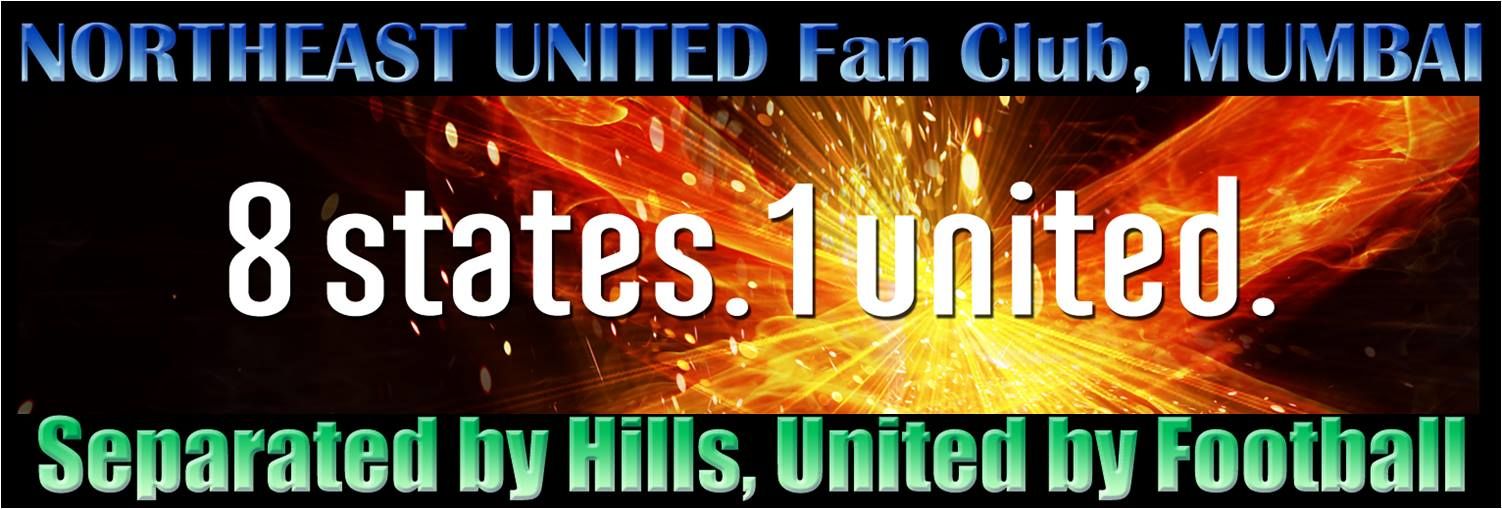
To come together as one and co-exist peacefully, we usually don’t talk about our past. I am one of the elected representatives of our recently set up “North East Helpline Mumbai” here in Mumbai, and none of us (representatives from all eight States) talk about any of the past conflicts back home or publish posts on our forums that may cause division between different Northeastern communities. This was the banner we used at the recent NorthEast United FC versus Mumbai City FC match.


It’s like how I asked some of my friends from Rwanda who studied at my college (PSG Tech, Coimbatore) about the Tutsi-Hutu conflict. Their first reaction was, “How the hell do you know about that?” and I was like, “Hotel Rwanda is one of my all-time favorite movies and I have seen it more than 20 times”, and then they told me that they never discuss that incident among themselves, and even among their batch of around 80 exchange students, nobody identified himself as a Tutsi or a Hutu. I totally agree. The past is the past. We move past it.

If you really want to understand the complexity of the insurgency in the North East, it is pretty much like the current conflict in the Middle East.  Quoting from the source – “Sir, Iran is backing Assad. Gulf states are against Assad! Assad is against Muslim Brotherhood. Muslim Brotherhood and Obama are against General Sisi. But Gulf states are pro-Sisi! Which means they are against Muslim Brotherhood! Iran is pro-Hamas, but Hamas is backing Muslim Brotherhood! Obama is backing Muslim Brotherhood, yet Hamas is against the U.S.! Gulf states are pro-U.S. But Turkey is with Gulf states against Assad; yet Turkey is pro-Muslim Brotherhood against General Sisi. And General Sisi is being backed by the Gulf states! Welcome to the Middle East and have a nice day.”

Yup, sometimes it is more or less as complicated as that.


EDIT: Lolz, I thought this was an A2A, but I could not find it anywhere at the bottom (you usually see that “Asked to answer by xxx” at the end of an answer). So I went through my long list of old notifications and finally found this. Lolz, this was never an A2A, I’m such a Quora noobie!